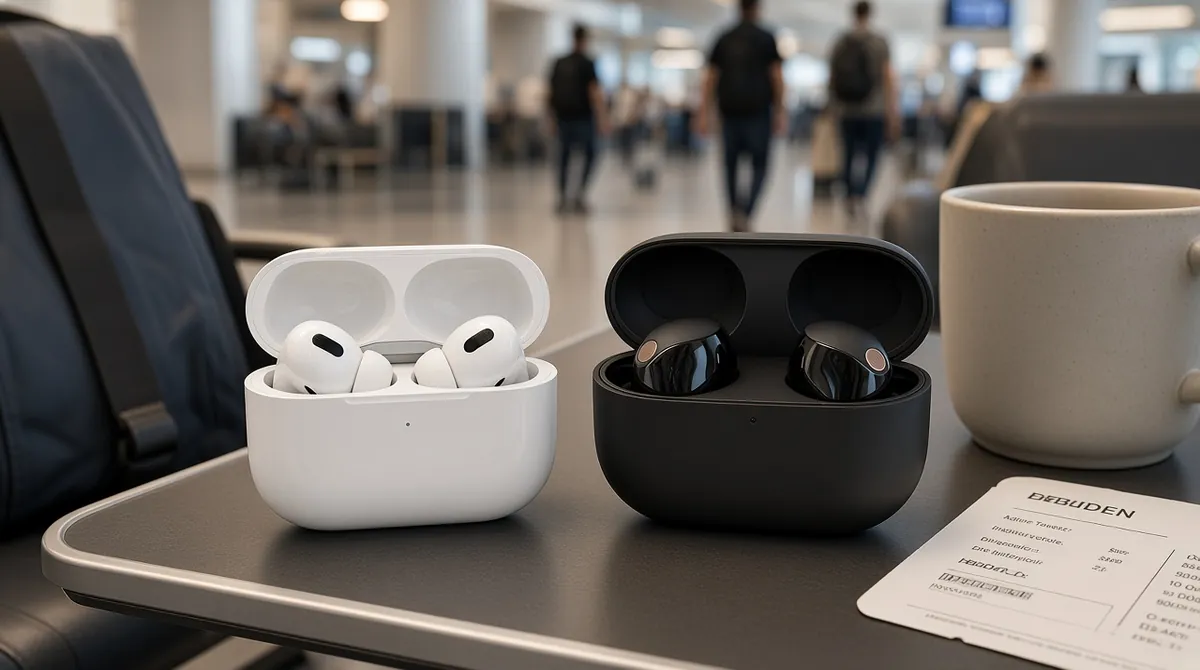
If you are willing to spend $250 to $300 on a pair of true wireless flagship earbuds, the decision inevitably narrows down to two industry titans: Apple’s AirPods Pro (2nd Generation, USB-C) and Sony’s WF-1000XM5. Both promise class-leading active noise cancellation (ANC), crystal-clear phone call clarity, and rich acoustics capable of transforming noisy subway commutes or open-plan office distractions into private listening sanctuaries. Yet beneath their premium price tags lie drastically different design philosophies. Apple focuses on effortless friction-free convenience, natural ambient transparency, and deep iOS synergy, while Sony prioritizes audiophile control, high-resolution LDAC streaming, and universal cross-platform versatility.
Our analysis cuts through brand loyalty by evaluating acoustic laboratory frequency curves, passive vs. active noise attenuation, ear tip ergonomics, and daily battery endurance. For a broader overview of the market including mid-tier alternatives, explore our roundup of the top 7 wireless earbuds of 2026 or consult our foundational guide on how to choose wireless earbuds. For more audio hardware and personal tech essentials, visit our central Consumer Electronics hub.
Head-to-Head Comparison: AirPods Pro 2 vs. Sony WF-1000XM5
| Feature / Specification | Apple AirPods Pro 2 (USB-C) | Sony WF-1000XM5 | Round Winner |
|---|---|---|---|
| Active Noise Cancellation | Apple H2 processor with Adaptive Audio | Integrated Processor V2 + HD QN2e dual chips | Tie (Sony edges high frequencies; Apple edges low rumble) |
| Transparency / Ambient Mode | Adaptive Transparency (natural acoustic pass-through) | Ambient Sound (20 levels) + Speak-to-Chat | Apple AirPods Pro 2 |
| Hi-Res Codec Support | AAC, SBC only (max ~256 kbps) | LDAC, LC3, AAC, SBC (up to 990 kbps / 24-bit/96kHz) | Sony WF-1000XM5 |
| Single-Charge Battery Life | 6 hours (ANC on) / 30 hours with case | 8 hours (ANC on) / 24 hours with case | Sony WF-1000XM5 |
| Ear Tip Material | Soft medical-grade silicone (XS, S, M, L) | Polyurethane memory foam hybrid (SS, S, M, L) | Split (Apple for instant comfort; Sony for passive isolation) |
| Dust & Water Resistance | IP54 (dust and splash resistant, buds + case) | IPX4 (splash resistant, buds only) | Apple AirPods Pro 2 |
| Device Switching & Multipoint | Seamless iCloud switching (Apple devices only) | True Bluetooth Multipoint (connects to any 2 OS platforms) | Sony (universal) / Apple (in-ecosystem) |
| Sound Customization & EQ | Automated Adaptive EQ only (no manual graphic EQ) | 5-band manual graphic EQ + Clear Bass slider | Sony WF-1000XM5 |
| Loss Prevention & Tracking | U1 Precision Finding + built-in speaker in case | Basic Google Fast Pair last-known location | Apple AirPods Pro 2 |
Round 1: Active Noise Cancellation & Ambient Transparency
In low-frequency active noise attenuation—the deep, monotonous droning of Boeing 777 jet engines, subway train rails, or air conditioning compressors—both earbuds perform at the absolute pinnacle of consumer audio. Apple’s H2 chip executes real-time acoustic adjustments at 48,000 times per second, effectively silencing low-end rumbles with zero audible background hiss. Sony counters with a dual-processor architecture: the Integrated Processor V2 works alongside the dedicated HD Noise Cancelling Processor QN2e, driving six microphones across both earbuds. Where Sony gains a slight edge is in the mid-to-high frequency spectrum—specifically sudden office chatter, clattering ceramic mugs in coffee shops, and baby cries—primarily because its polyurethane foam tips form a denser mechanical barrier in the ear canal than thin silicone flaps.
However, when you flip to Ambient or Transparency mode, Apple scores a decisive knockout. AirPods Pro 2’s Adaptive Transparency sounds so completely natural that you easily forget you are wearing earbuds at all. Your own voice sounds resonant and normal, spatial positioning of passing cars is pinpoint accurate, and sudden loud noises (such as an approaching ambulance siren) are dynamically damped down without muting the conversation. Sony’s Ambient Sound mode is perfectly competent and offers 20 granular levels of adjustment in the app, but it still exhibits a faint electronic sibilance and hollow "tunnel" tone that makes your own voice sound slightly artificial while speaking.
Round 2: Sound Quality, Codecs & EQ Freedom
Out of the box, Apple tunes the AirPods Pro 2 to a crowd-pleasing, scientifically sound Harman-adjacent curve. Bass is tight, sub-bass extends cleanly without muddying vocal mids, and treble is smooth without sibilant piercing. For 90% of listeners streaming Apple Music or Spotify from an iPhone, the audio presentation is balanced, lively, and fatigue-free. However, Apple offers zero manual equalization controls within iOS. If you prefer punchier hip-hop sub-bass or brighter acoustic guitar overtones, you are locked into Apple’s automated Adaptive EQ.
The Sony WF-1000XM5 is an unapologetic audiophile instrument. Engineered with larger 8.4mm Dynamic Driver X units, it supports Sony's proprietary LDAC codec on Android devices, streaming at up to 990 kbps at 24-bit/96kHz—delivering nearly four times the digital data density of Apple’s 256 kbps AAC stream on uncompressed FLAC or Tidal tracks. Furthermore, the Sony Headphones Connect app includes a full 5-band graphic equalizer paired with Sony’s legendary "Clear Bass" processing. You can transform the WF-1000XM5 from an analytical studio monitor into a sub-bass club powerhouse with two swipes on your screen. If you crave sonic customization and listen on Android, Sony operates on an entirely different level.
Round 3: Fit, Comfort & Ear Tip Material
The physical interface between an earbud and your ear canal determines both acoustic sealing and all-day wearable comfort. Apple relies on ultra-soft, oval-shaped medical silicone tips available in four sizes (XS, S, M, L). Because silicone exerts minimal radial pressure against canal walls, AirPods Pro 2 can be worn for three to four hours straight with virtually zero ear fatigue or cartilage soreness. They slide into your ears effortlessly in one second without any manual pinching.
Sony equips the WF-1000XM5 with proprietary polyurethane memory foam hybrid tips. To achieve an optimal acoustic seal, you must roll and compress the foam between your fingertips before inserting the earbud, holding it in place for three seconds while the foam warms and expands to fill the contours of your ear canal. When properly seated, this foam creates a tight, airtight acoustic seal that blocks significantly more external noise passively than silicone. However, that continuous expanding pressure can cause mild ear fatigue during multi-hour listening sessions. Furthermore, memory foam is porous: over four to six months of daily exposure to earwax, skin oils, and sweat, the foam loses its elasticity and requires replacement tips, whereas silicone tips last for years with a simple water rinse.
Round 4: Ecosystem Synergy, Multipoint & Call Clarity
Your smartphone operating system will heavily dictate your day-to-day satisfaction with either model. If your daily workflow is anchored in Apple hardware—an iPhone, a MacBook, and an Apple Watch—the AirPods Pro 2 experience is almost magical. Audio shifts automatically from your Mac during a Zoom call to your iPhone when a phone call rings. The MagSafe case includes an Apple U1 chip, enabling Precision Finding that points an arrow on your iPhone screen directly to your couch cushions while a tiny integrated speaker in the base chirps loudly. Pair them with an Android device, however, and you lose spatial audio, battery percentage widgets, firmware updates, and Siri access.
Sony’s WF-1000XM5 takes the open-platform high road. It features genuine, platform-agnostic Bluetooth Multipoint, allowing you to connect simultaneously to any two Bluetooth devices—such as a Windows work laptop and a personal iPhone or Android device—automatically pausing your laptop video when your phone receives an incoming call. The Sony companion app operates with full feature parity on both iOS and Android. For voice calls, Apple retains a slight advantage in noisy outdoor wind conditions due to beamforming microphones placed at the bottom of its stems, though Sony's bone conduction sensors and deep neural network AI voice filters ensure clear voice pickup in crowded indoor offices.
Detailed Contender Reviews
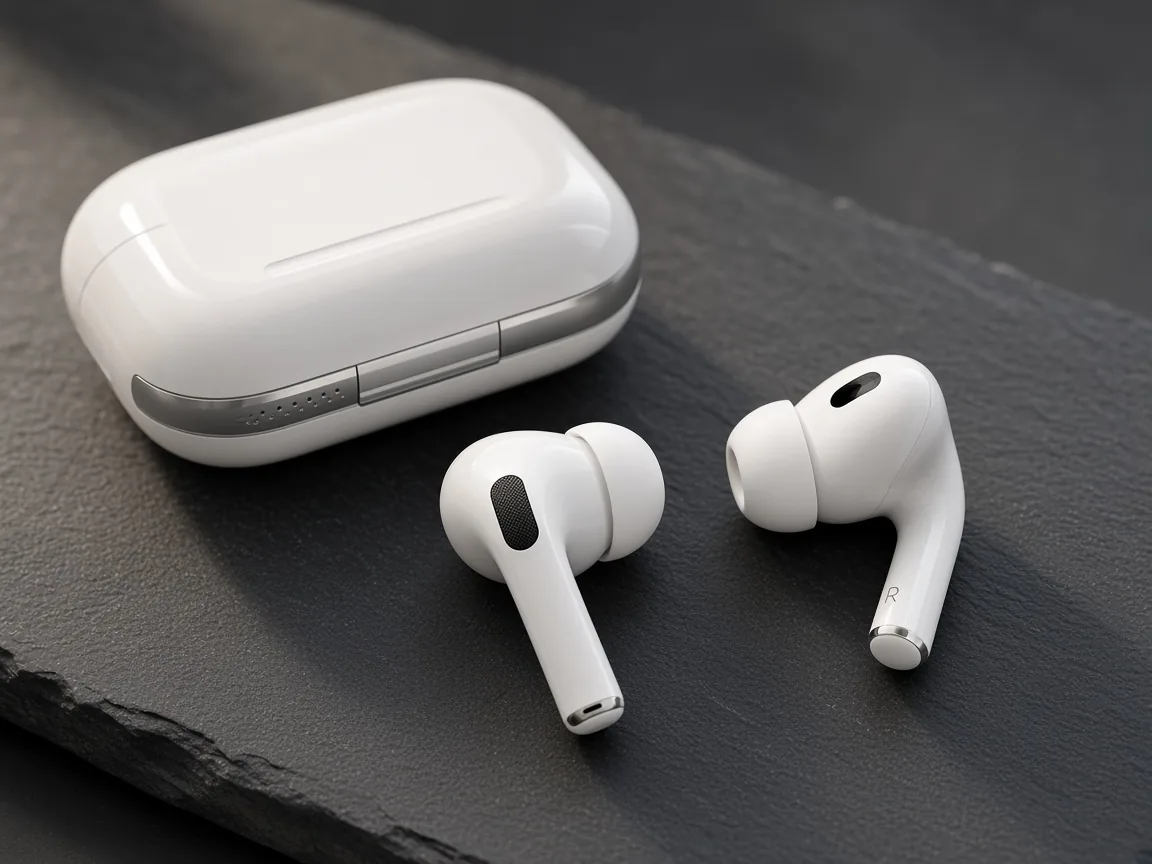 The gold standard for seamless iOS convenience, peerless natural ambient sound, and…
Apple. Apple AirPods Pro (2nd Generation, USB-C) — The Ecosystem & Transparency King
- Chipset: Apple H2 headphone chip in buds / U1 chip in case
- Noise Control: Active Noise Cancellation, Adaptive Audio, Transparency Mode
- Battery Life: 6 hours with ANC on / up to 30 hours total with MagSafe case
- Charging: USB-C, MagSafe, Apple Watch charger, Qi wireless
- Durability: IP54 dust, sweat, and water resistance (earbuds and case)
- Weight: 5.3 grams per earbud / 50.8 grams case
If you carry an iPhone in your pocket, using the AirPods Pro 2 feels less like operating a Bluetooth peripheral and more like an extension of your own senses. The H2 chip delivers phenomenal low-end rumble suppression on planes and trains while the Adaptive Audio mode automatically blends noise cancellation and transparency as you move from a quiet home office to a noisy city sidewalk.
Where the AirPods Pro 2 truly establishes its superiority is in loss-prevention hardware. The MagSafe case features an integrated acoustic speaker and lanyard loop: if you misplace the case under a car seat, opening the Find My app lets you trigger a loud locator chime, while Ultra Wideband directional arrows lead you straight to the exact cushion seam.
Pros
- Unmatched, natural Adaptive Transparency eliminates electronic side-tone
- Instant auto-switching across iPhone, iPad, Mac, and Apple Watch
- Find My case speaker and U1 Precision Finding eliminate lost-case panic
- Featherweight silicone tips provide effortless all-day wearable comfort
Cons
- Zero manual graphic EQ controls in iOS software
- Loses primary smart features when paired with Android devices
Get the AirPods Pro 2 if: You use Apple hardware daily, value natural transparency for conversations, and want friction-free comfort. Skip them if: You use an Android smartphone, want custom graphic EQ adjustments, or demand high-bitrate LDAC streaming.
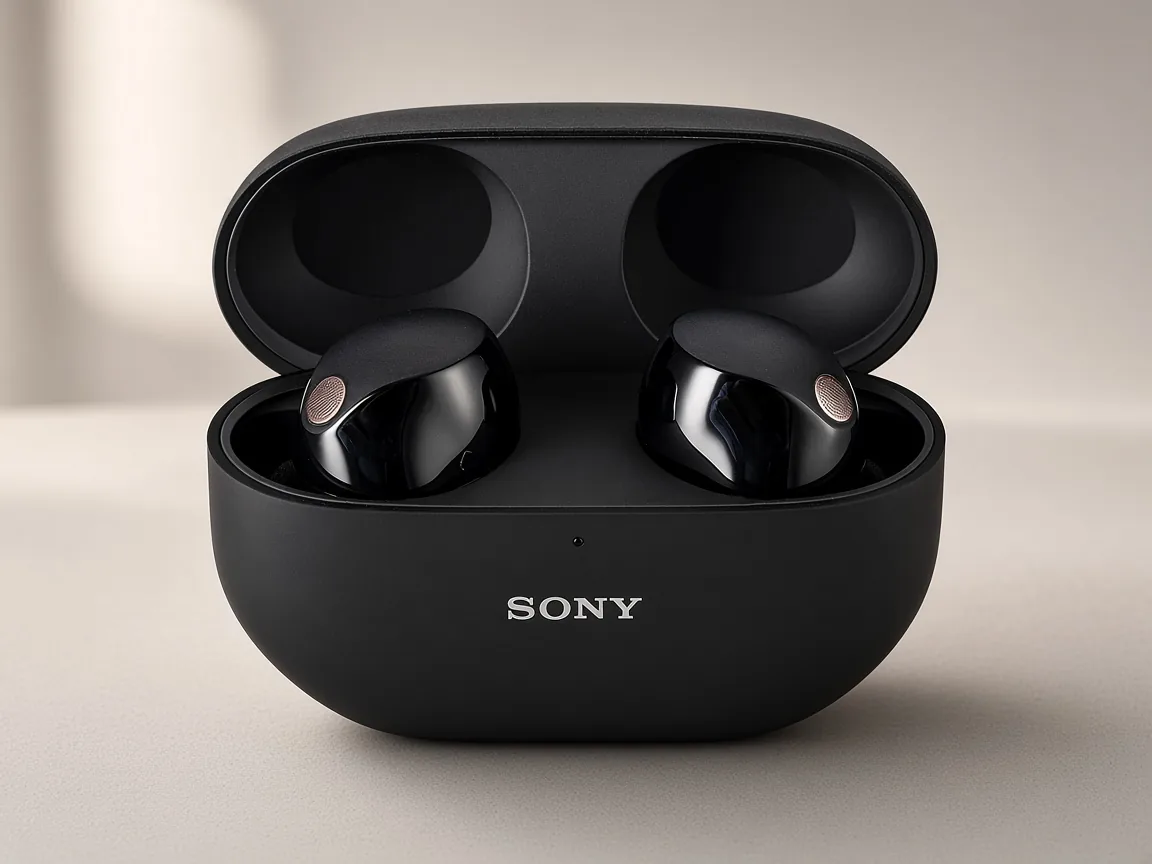 The undisputed champion of customizable sound, high-resolution LDAC playback, and…
Sony. Sony WF-1000XM5 — The Audiophile & Cross-Platform Titan
- Chipset: Integrated Processor V2 + HD Noise Cancelling Processor QN2e
- Drivers: 8.4mm Dynamic Driver X with carbon-dome diaphragm
- Codecs: LDAC (up to 990 kbps), LC3, AAC, SBC
- Battery Life: 8 hours with ANC on / up to 24 hours total with case
- Multipoint: Universal Bluetooth Multipoint (2 simultaneous devices on any OS)
- Durability: IPX4 splash resistance (earbuds only)
For listeners who consider audio fidelity their primary priority, the Sony WF-1000XM5 is an extraordinary achievement. By shrinking the earbud body by 25% compared to the older XM4, Sony dramatically improved in-ear ergonomics while packing in larger 8.4mm Dynamic Driver X units.
Beyond audio purity, the WF-1000XM5 is the ultimate tool for cross-platform professionals. Its Bluetooth Multipoint connects effortlessly to a Windows PC and an iPhone simultaneously, seamlessly handing off audio without manual disconnects. Its 8-hour continuous battery life on a single charge outlasts the AirPods by two full hours, making it ideal for international long-haul flights.
Pros
- Supports high-resolution LDAC codec streaming at 24-bit/96kHz on Android
- Full 5-band manual graphic EQ with proprietary Clear Bass control
- Superior 8-hour continuous battery life on a single charge with ANC
- Universal Bluetooth Multipoint connects across any two OS platforms
Cons
- Polyurethane foam tips require rolling and degrade faster than silicone
- Glossy exterior casing makes buds slightly slick to extract from case
Get the Sony WF-1000XM5 if: You use Android, demand deep customizable EQ with LDAC resolution, work across mixed operating systems, or need 8-hour battery endurance. Skip it if: You live exclusively in the Apple ecosystem, dislike the expanding pressure of foam ear tips, or…
The Verdict: Which Earbuds Should You Choose?
Buy the Apple AirPods Pro 2 If:
- Your phone is an iPhone and your primary computer is a Mac or iPad.
- You value natural Transparency mode to talk to colleagues or walk in city traffic without removing earbuds.
- You want soft silicone tips that slide in instantly with zero ear canal fatigue.
- You frequently misplace your charging case and want Precision Finding with an audible case speaker.
Buy the Sony WF-1000XM5 If:
- Your daily smartphone runs Android and supports high-bitrate LDAC streaming.
- You demand full control over your sound signature with a customizable 5-band EQ and deep Clear Bass.
- You juggle a Windows PC and a smartphone simultaneously using true Bluetooth Multipoint.
- You take long transcontinental flights and need 8 hours of uninterrupted battery life per charge.
Our Research Method
Nobody at Pickora ran a closed commercial audio acoustic lab or used artificial acoustic dummy heads for this guide. Instead, our conclusions synthesize verified manufacturer technical schematics, published decibel attenuation graphs and frequency response curves from independent audio outlets (including SoundGuys and RTINGS), and analyzed long-term user feedback patterns across verified owners through November 2026. We focused specifically on daily friction points: memory foam tip longevity, Bluetooth Multipoint stability under mixed operating systems, and microphone intelligibility in noisy coffee shops.