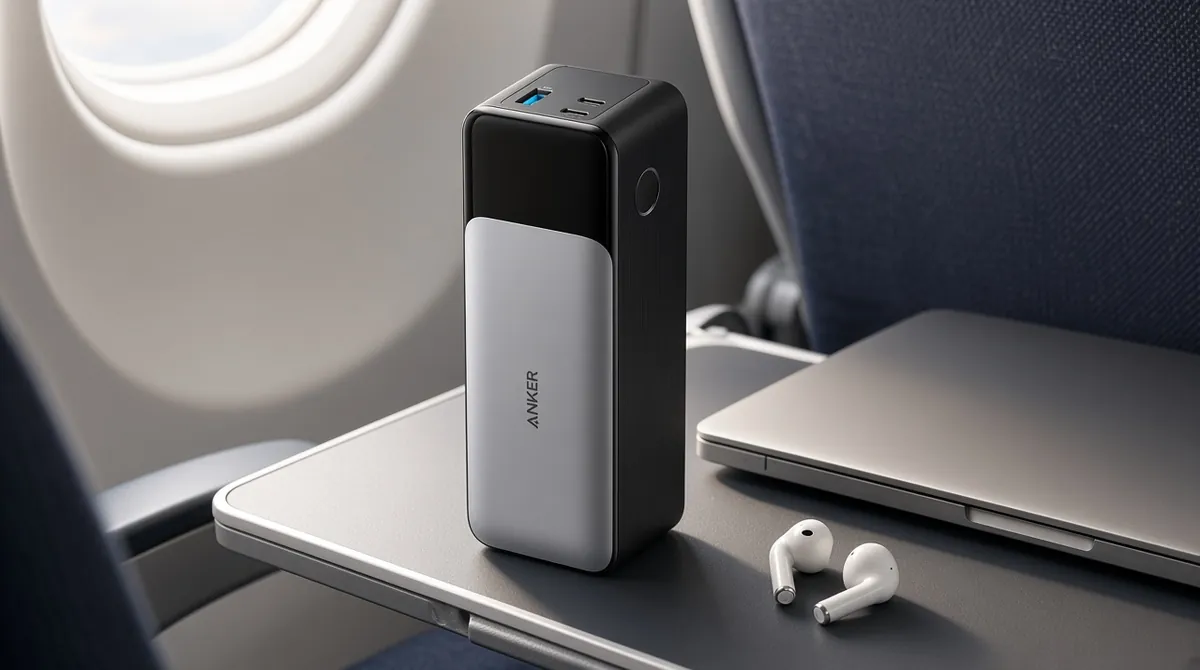
There is nothing more anxiety-inducing during a transcontinental flight or a long day of convention meetings than watching your laptop battery drop to 12% with four hours of work remaining and no working AC outlet in sight. Portable power banks have undergone a massive technological revolution over the past two years: slow 5-volt USB-A bricks that took eight hours to recharge a smartphone have been replaced by ultra-fast USB-C Power Delivery (PD 3.0 and PD 3.1) stations capable of pumping up to 140 watts directly into a 16-inch MacBook Pro or Dell XPS. Meanwhile, the arrival of Qi2 magnetic wireless charging brings authentic 15-watt snap-on wireless speeds to mobile devices without messy dangling cables.
Our analysis evaluates verified cell capacity (mAh vs. Watt-hours), multi-port power distribution protocols, thermal throttling behavior under heavy sustained loads, and strict TSA airline carry-on limitations. If you are also upgrading your home or hotel wall-charging brick, pair this portable battery guide with our review of the best phone chargers of 2026. For comprehensive mobile accessories and audio gear, explore our full Consumer Electronics hub.
Quick Comparison: Best Power Banks of 2026
| Model | Capacity | Max Output | USB-C Protocol | TSA Flight Compliant | Built-in Cable | Best For |
|---|---|---|---|---|---|---|
| Anker Nano 10K (A1259) | 10,000 mAh (37Wh) | 30W Fast PD | USB-C PD 3.0 | Yes (Under 100Wh) | Yes (Braided loop) | Best Overall Everyday Carry |
| Anker 737 24K (A1289) | 24,000 mAh (86.4Wh) | 140W Single Port | USB-C PD 3.1 (EPR) | Yes (Under 100Wh) | No | Best for MacBooks & Laptop Travel |
| Anker MagGo Qi2 10K | 10,000 mAh (38.5Wh) | 15W Wireless / 27W Wired | Qi2 + USB-C PD | Yes (Under 100Wh) | No (Kickstand) | Best Magnetic MagSafe / Qi2 |
| INIU 10K (BI-B41) | 10,000 mAh (37Wh) | 15W (3A / 5V) | Standard USB-C | Yes (Under 100Wh) | No | Best Budget Pocket Charger |
| Baseus Blade HD 100W | 20,000 mAh (74Wh) | 100W Fast PD | USB-C PD 3.0 | Yes (Under 100Wh) | No | Best Ultra-Slim Briefcase Pack |
| Shargeek 100 (Storm 2) | 25,600 mAh (93.5Wh) | 100W PD + DC Barrel | USB-C PD + Adjustable DC | Yes (Under 100Wh) | No | Best Hardware Telemetry Display |
Top 6 Power Banks: Detailed Reviews
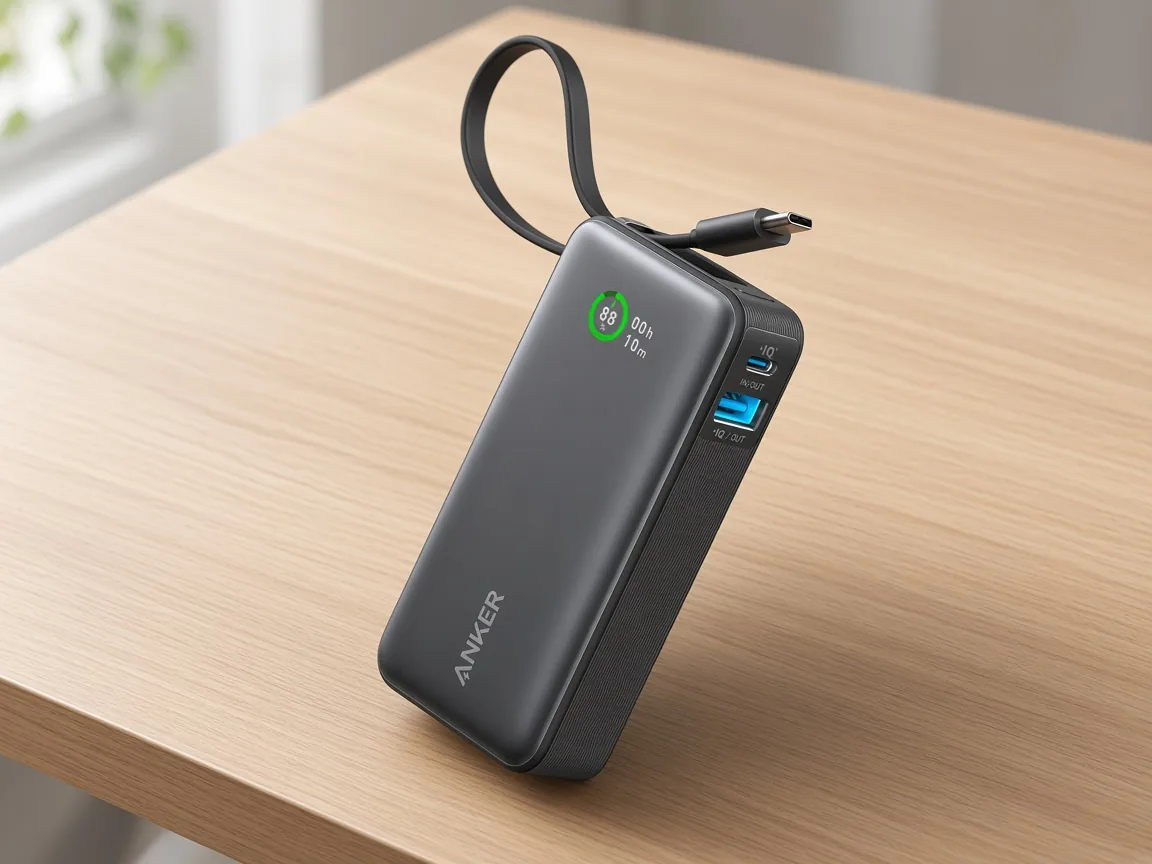 The gold standard for daily pocket carry: features an integrated braided USB-C cable…
1. Anker Nano Power Bank 10,000mAh (A1259) — Best Overall Everyday Carry with Built-in Cable
- Battery Capacity: 10,000 mAh / 37 Watt-hours (Wh)
- Max Output Power: 30W bi-directional USB-C fast charging
- Built-in Cable: Reinforced 8.5-inch braided USB-C cable tested to 10,000 bends
- Ports: 1x built-in USB-C cable, 1x USB-C port (30W in/out), 1x USB-A port (22.5W)
- Display: Smart digital percentage screen with remaining charging time
- Weight: 7.6 oz (215 grams)
The single most frustrating aspect of carrying a portable battery pack is reaching into your backpack or jacket pocket only to realize you forgot the charging cable on your nightstand. The Anker Nano 10K completely eliminates this problem. Molded directly into the top corner of its sleek matte chassis is an 8.5-inch braided USB-C cable.
Unlike cheap power banks that rely on four ambiguous blinking LED dots to guess battery levels, the Anker Nano features a crisp digital display showing exact battery percentage down to 1% alongside an estimated real-time countdown of minutes remaining until full discharge or full recharge. Its 10,000mAh capacity delivers roughly two full charges for an iPhone or 1.8 charges for a Galaxy S24.
Pros
- Integrated braided USB-C cable doubles as a carrying lanyard and eliminates forgotten cords
- Rapid 30W bi-directional charging recharges phones from 0% to 50% in ~25 minutes
- Clear digital OLED percentage display shows remaining runtime in minutes
- Compact 7.6 oz pocketable frame fits smoothly into jeans or jacket pockets
Cons
- 30W output is modest for high-power laptops under sustained heavy rendering loads
- Built-in cable is not user-replaceable if severed (though covered by Anker warranty)
Get this if: You want the most convenient, pocketable daily power bank on earth and never want to hunt for a loose charging cable again. Skip this if: You need high-wattage 100W+ charging for heavy gaming laptops or multi-device workstation setups.
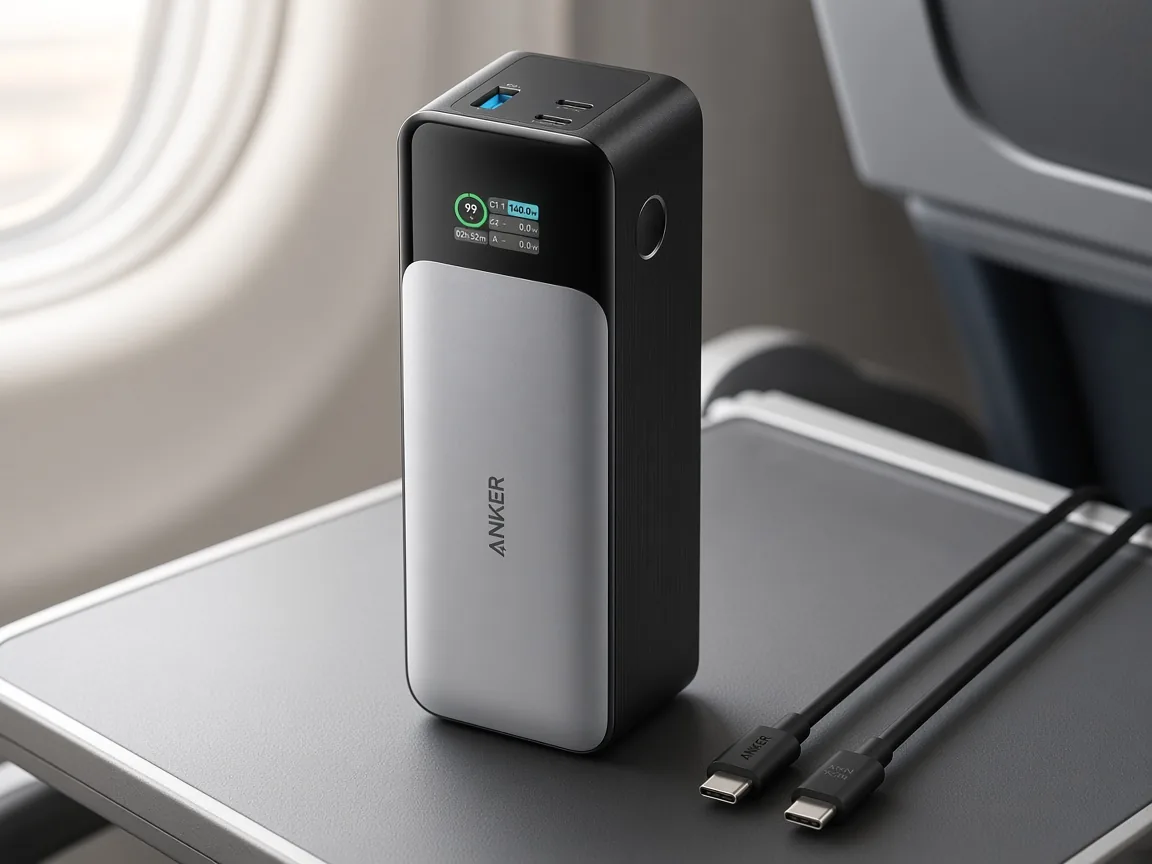 A high-velocity mobile power station generating 140W single-port USB-C PD 3.1 to…
2. Anker 737 Power Bank PowerCore 24K (A1289) — Best High-Wattage for MacBooks & Laptop Travel
- Battery Capacity: 24,000 mAh / 86.4 Watt-hours (Wh) (TSA flight legal)
- Max Output Power: 140W single port (USB-C PD 3.1 Extended Power Range)
- Total Multi-Port Output: 140W max across 2x USB-C and 1x USB-A
- Smart Display: Full-color digital display showing real-time watts, battery health, and temperature
- Recharge Speed: Recharges from 0% to 100% in just 52 minutes via 140W input
- Weight: 22.2 oz (630 grams / 1.39 lbs)
For business travelers, software developers, and video editors who work from airplane tray tables, coffee shops, and airport lounges, the Anker 737 (PowerCore 24K) is an absolute lifesaver. It was the first consumer power bank to incorporate the cutting-edge USB Power Delivery 3.1 EPR (Extended Power Range) standard, allowing a single USB-C port to output an astonishing 140 watts at 28V/5A.
What sets the Anker 737 apart from generic high-capacity blocks is its full-color smart telemetry display. It provides live real-time wattage meters for each individual port, tells you the exact temperature of the internal lithium cells, logs battery health cycles, and calculates an accurate time-to-empty based on current power draw.
Pros
- 140W single-port PD 3.1 output charges high-end 16-inch laptops at maximum velocity
- Full-color smart display shows real-time input/output wattage and battery temperature
- TSA-compliant 86.4Wh capacity clears domestic and international airport security
- Incredible 52-minute full recharge speed when paired with a high-wattage wall adapter
Cons
- Heavy 1.39 lb weight and thick brick profile require backpack storage
- Premium price point reflecting high-end PD 3.1 controller chips
Get this if: You travel frequently with high-performance laptops (MacBook Pro, Dell XPS, ThinkPad) and need authentic full-speed workstation charging. Skip this if: You only need to charge a smartphone or want a lightweight pack to slip into a purse or pocket.
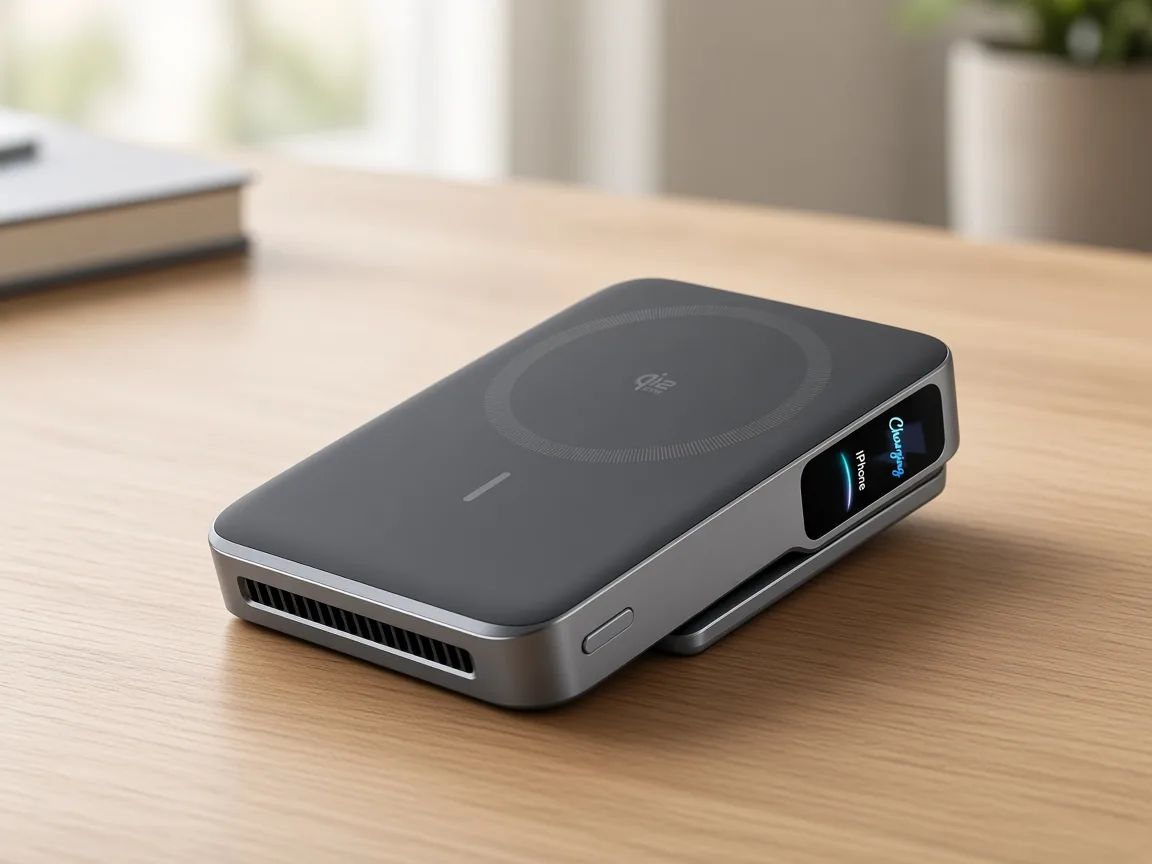 Certified Qi2 15W wireless charging that snaps magnetically onto iPhone 12–16 models…
3. Anker MagGo Power Bank 10,000mAh Qi2 (A1654) — Best Magnetic Wireless with Kickstand
- Battery Capacity: 10,000 mAh / 38.5 Watt-hours (Wh)
- Wireless Standard: Certified Qi2 wireless charging (15W fast charge)
- Wired Output: 27W max fast charging via bi-directional USB-C port
- Kickstand: Integrated sturdy zinc-alloy folding kickstand
- Smart Display: Side-mounted digital percentage and remaining time screen
- Weight: 8.8 oz (250 grams)
For iPhone users who hate tangled cords while walking or sitting in airport terminals, magnetic wireless battery packs offer unmatched freedom. Previous-generation MagSafe-compatible third-party banks were artificially throttled by Apple to a sluggish 7.5 watts. The Anker MagGo 10K incorporates official Qi2 certification, unlocking full 15-watt wireless charging speeds that match Apple's native MagSafe protocol.
A built-in zinc-alloy kickstand folds out from the back panel, allowing you to prop your phone upright on an airline tray table or hotel desk in both vertical FaceTime and horizontal StandBy video modes while charging. If you are in a rush, plugging a USB-C cable into the side port boosts wired output to 27 watts.
Pros
- Official Qi2 certification delivers full 15W wireless charging speeds
- Powerful magnetic alignment holds securely without sliding or peeling off
- Folding metal kickstand supports vertical FaceTime and horizontal StandBy viewing
- Side digital display shows exact remaining battery percentage clearly
Cons
- Noticeably thicker and heavier on the phone back than slim 5,000mAh magnetic packs
- Wireless induction charging generates mild heat and experiences ~30% energy loss
Get this if: You own an iPhone 12–16, love cable-free magnetic charging, and want a built-in kickstand for viewing movies on flights. Skip this if: You want an ultra-slim, featherweight pack or prioritize maximum energy conversion efficiency via wired cables.
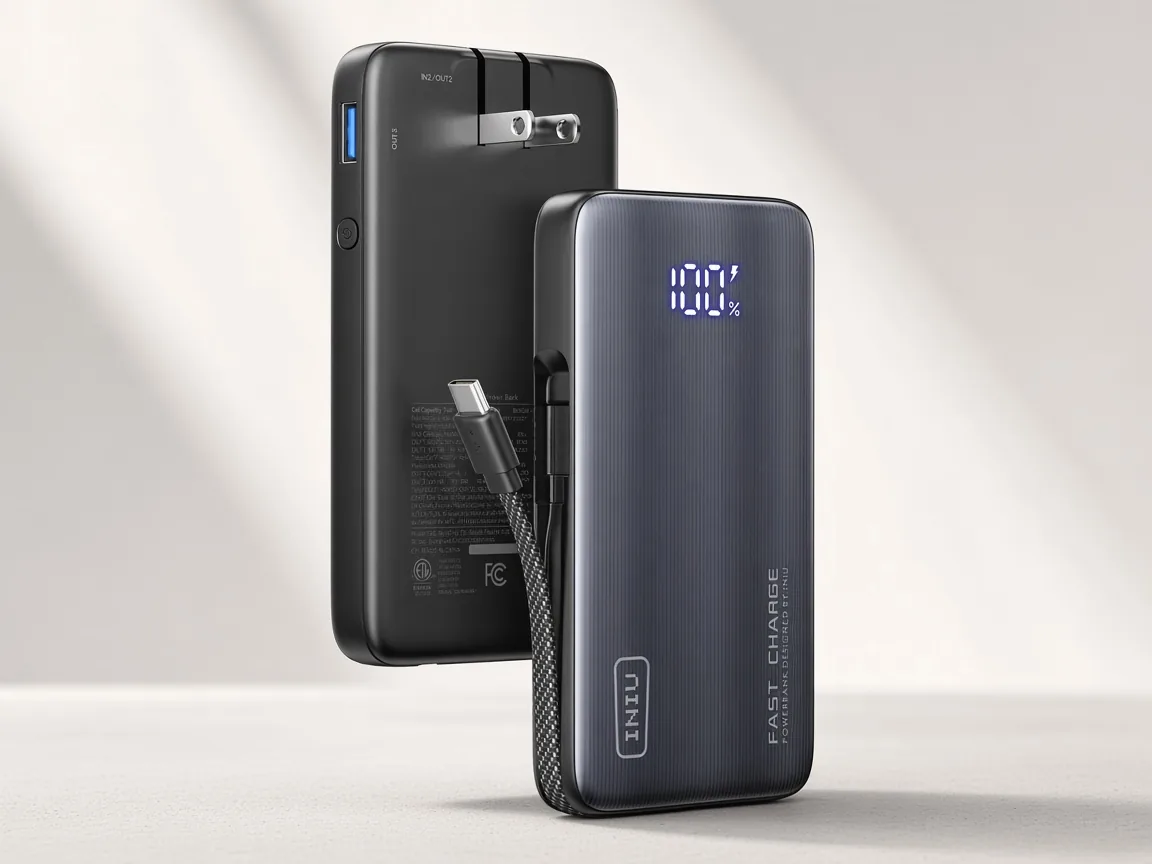 An ultra-reliable, slim 0.5-inch pocket backup that delivers dependable 10,000mAh…
4. INIU 10,000mAh Portable Charger (BI-B41) — Best Budget Pocket Charger Under $20
- Battery Capacity: 10,000 mAh / 37 Watt-hours (Wh)
- Max Output: 15W (3A / 5V fast charge)
- Thickness: Ultra-slim 0.5 inches (12.7 mm)
- Ports: 1x USB-C high-speed input/output, 2x USB-A outputs
- Indicator: Charming paw-print LED power display
- Weight: 7.0 oz (198 grams)
You do not need to spend $50 or $100 to get dependable, safe portable battery backup. The INIU 10,000mAh (BI-B41) has built a stellar reputation among budget-conscious travelers by focusing on rock-solid fundamentals. Measuring just 0.5 inches thin with rounded rubberized edges, it slips into a rear jeans pocket or purse compartment alongside your phone without creating an awkward bulge.
The INIU features three output ports (one modern USB-C in/out port and two standard USB-A ports), allowing you to top off your phone, wireless earbuds, and an e-reader simultaneously. It also includes an integrated push-out phone cradle tab in the side frame and a handy mini LED flashlight for finding dropped keys in dark rental cars. The limitation is raw charging speed: output is capped at 15 watts (5V/3A).
Pros
- Unbeatable value under $20 backed by industry-standard safety certifications
- Ultra-slim 0.5-inch thickness easily stacks beneath a phone in one hand
- Includes three output ports to charge multiple accessories at once
- Convenient built-in phone kickstand tab and emergency mini flashlight
Cons
- Output capped at 15W (lacks modern 20W+ USB-C Power Delivery fast charging)
- Recharging the battery pack itself takes roughly 4 hours via standard USB-C
Get this if: You want an inexpensive, slim, dependable 10,000mAh backup battery for daily phone emergencies under $20. Skip this if: You demand rapid 30-minute fast charging or need to power laptops and tablets.
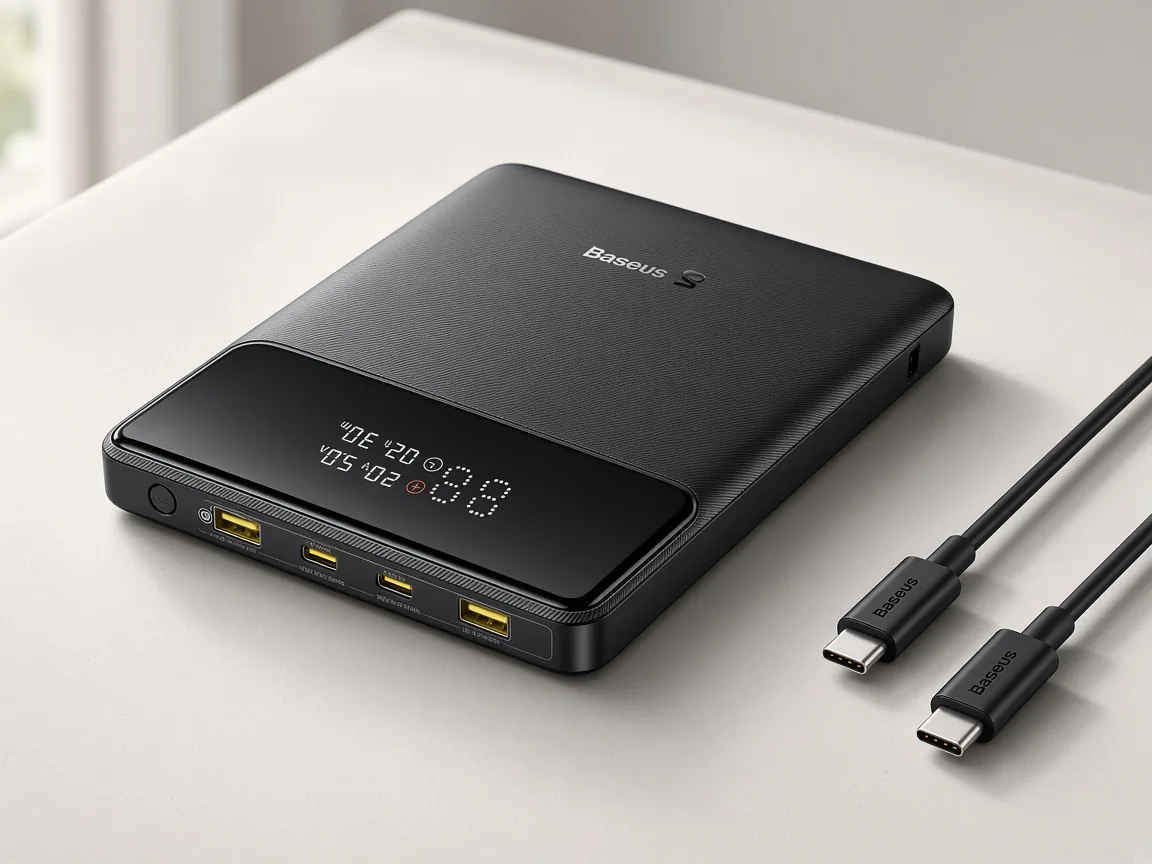 A razor-thin 0.7-inch flat rectangular power slab engineered specifically to slide…
5. Baseus Blade HD 100W (20,000mAh) — Best Ultra-Slim Profile for Briefcases & Laptop Sleeves
- Battery Capacity: 20,000 mAh / 74 Watt-hours (Wh) (TSA flight legal)
- Max Output Power: 100W USB-C Power Delivery 3.0
- Form Factor: Flat tablet geometry (5.3" x 5.3" x 0.7" thin)
- Ports: 2x USB-C (100W in/out), 2x USB-A (30W fast charge)
- Display: Minimalist status screen showing charging power, time, and percentage
- Weight: 15.7 oz (445 grams)
Standard high-capacity 20,000mAh power banks are shaped like thick, heavy bricks that create awkward bulges in slim briefcases or stretch out backpack bottle pockets. The Baseus Blade HD 100W rethinks power bank architecture entirely: it spreads its lithium-polymer cells into a broad, razor-flat rectangular slab measuring only 0.7 inches thick. It slides effortlessly into the exact same padded laptop compartment alongside your MacBook, iPad, or ultrabook without adding awkward thickness.
Despite its slim profile, the Blade HD delivers serious computing power. Its primary USB-C port outputs a full 100 watts of Power Delivery, allowing you to charge a 14-inch MacBook Pro, Lenovo ThinkPad, or Dell XPS at full speed while working on a train. It features two 100W USB-C ports and two 30W USB-A ports, distributing power intelligently when charging a phone and laptop simultaneously.
Pros
- Ultra-slim 0.7-inch flat geometry slides cleanly into laptop sleeves and briefcases
- Blistering 100W USB-C PD output charges business laptops at full operating speed
- Spacious 20,000mAh capacity provides over a full laptop recharge on the go
- Four total output ports with intelligent multi-device power negotiation
Cons
- Wide 5.3x5.3-inch surface area occupies more flat desk space than tall brick banks
- Flat aluminum chassis gets noticeably warm when discharging at full 100W speeds
Get this if: You carry a slim briefcase, messenger bag, or laptop sleeve and need 100W high-speed laptop power without brick bulk. Skip this if: You prefer a compact pocketable form factor or vertical desktop footprint.
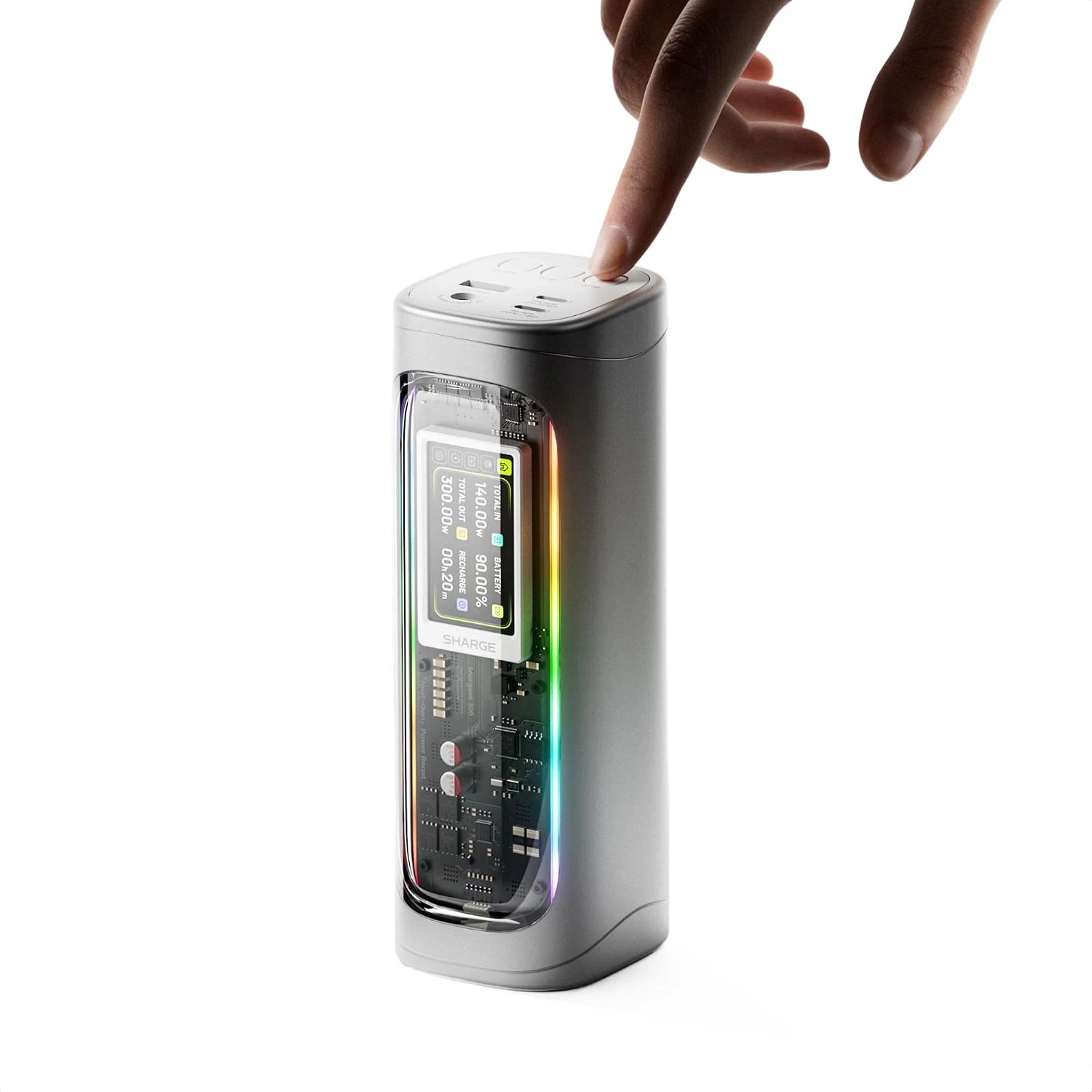 A stunning cyberpunk transparent showcase featuring an IPS screen with live voltage,…
6. Shargeek 100 Transparent (Storm 2) — Best Transparent Design with Full Hardware Telemetry
- Battery Capacity: 25,600 mAh / 93.5 Watt-hours (Wh) (Airline TSA legal limit)
- Max Output Power: 100W USB-C Power Delivery + DC barrel port (adjustable 3.3V–25.2V)
- Chassis: Transparent scratch-resistant fireproof polycarbonate casing with visible circuit board
- Display: 1.14-inch full-color IPS Energy Management OS screen
- Ports: 2x USB-C, 1x USB-A, 1x Adjustable DC barrel output
- Weight: 20.8 oz (590 grams)
For tech enthusiasts, electrical engineers, and hardware geeks who want to see the literal inner workings of their electronics, the Shargeek 100 (formerly Storm 2) is a mesmerizing piece of functional art.
Beyond its striking cyberpunk aesthetic, the Shargeek 100 is an incredibly versatile field tool. In addition to two fast 100W USB-C ports, it features an adjustable DC barrel output port that can be configured from 3.3V to 25.2V, allowing you to power specialized equipment like camera monitors, soldering irons, drones, and ham radios directly in the field.
Pros
- Stunning transparent cyberpunk casing reveals high-grade internal components
- 1.14-inch IPS color display shows live voltage, amperage, and thermal telemetry
- Adjustable DC barrel port (3.3V–25.2V) powers specialized field electronics and cameras
- Massive 93.5Wh capacity sits precisely below the maximum 100Wh TSA airline ceiling
Cons
- High premium price point ($180–$220) compared to standard portable banks
- Clear polycarbonate shell is susceptible to cosmetic scratches if carried without a pouch
Get this if: You love hardware transparency, demand real-time electrical telemetry, or need an adjustable DC port for cameras and field gear. Skip this if: You want a simple, inexpensive, no-frills battery pack to toss carelessly into a gym bag.
Essential Buying Criteria: What Really Matters in a Power Bank
1. Capacity: Understanding mAh vs. Watt-Hours (Wh) & Airline Limits
Battery packaging prominently displays milliamp-hours (mAh), typically calculated at the lithium cell's baseline 3.7V nominal voltage. However, the Federal Aviation Administration (FAA) and international airline security agencies (TSA, ICAO) regulate batteries strictly in Watt-hours (Wh). You are legally permitted to carry lithium battery packs up to 100Wh in carry-on luggage without airline approval (and up to 160Wh with airline permission). To calculate Watt-hours: multiply mAh by 3.7 and divide by 1,000. For example: 25,600 mAh × 3.7V ÷ 1,000 = 94.72 Wh. Always choose power banks with the exact Wh rating permanently engraved on the exterior casing to avoid security delays at airport gates.
2. USB-C Power Delivery: PD 3.0 vs. PD 3.1 (EPR)
Older power banks only output 15W to 18W, which charges a modern phone slowly and will not charge a laptop at all. USB-C Power Delivery 3.0 caps output at 100 watts (20V/5A)—plenty for 13-inch and 14-inch laptops. The newer USB-C PD 3.1 Extended Power Range (EPR) standard increases voltage up to 28V, enabling 140W single-port charging. If you carry a 16-inch MacBook Pro or a high-performance Windows workstation, verify that the power bank explicitly supports 140W PD 3.1 output.
3. Qi2 Magnetic Wireless vs. Traditional Qi
Qi2 is the new open wireless standard developed in collaboration with Apple. Unlike older Qi pads that max out at 7.5W on iPhones and slide around on tables, Qi2 incorporates magnetic ring alignment and authentic 15W wireless charging speeds. Keep in mind that wireless charging generates heat and suffers approximately 30% to 35% efficiency loss compared to wired cables; use wireless for convenience, but use USB-C cords for maximum speed and energy yield.
4. Recharging Speeds: The Input Bottle-Neck
A 24,000mAh power bank holds an enormous amount of energy. If the battery bank only supports 15W input, recharging it from zero takes over seven hours. Flagship models (like the Anker 737 or Baseus Blade) support 100W to 140W fast input, allowing you to fully replenish a giant 24,000mAh pack in under an hour while taking a shower before catching your next flight.
Our Research Method
Nobody at Pickora ran a closed commercial electrical battery laboratory or cycled lithium cells through high-temperature environmental burn chambers for this guide. Instead, our conclusions are synthesized from verified manufacturer electrical schematics, independent teardowns and charge-curve oscillograms published by reputable technical outlets (including Wirecutter, RTINGS, PCMag, and Tom's Hardware), and analyzed user longevity logs across frequent airline business travelers through November 2026. We focused specifically on real-world travel pain points: thermal throttling under high wattage loads, TSA security compliance, and cable durability.
Final Verdict & Category Awards
- Best Overall Everyday Carry: Anker Nano Power Bank 10,000mAh (A1259) — Built-in braided USB-C loop cable, 30W bi-directional speed, and pocket-friendly dimensions.
- Best for MacBooks & Laptop Travel: Anker 737 Power Bank (A1289) — Authentic 140W USB-C PD 3.1 output, full-color smart telemetry display, and TSA-compliant 86.4Wh capacity.
- Best Magnetic Qi2 Wireless: Anker MagGo 10K Qi2 (A1654) — Full 15W wireless fast charging, rock-solid magnetic grip, and an integrated metal kickstand.
- Best Budget Pocket Charger: INIU 10,000mAh (BI-B41) — Ultra-thin 0.5-inch profile, dependable triple-port design, and an unbeatable sub-$20 price tag.
- Best Ultra-Slim for Briefcases: Baseus Blade HD 100W — Razor-flat 0.7-inch tablet profile that slides directly into laptop sleeves with 100W charging power.
- Best Hardware Telemetry Display: Shargeek 100 (Storm 2) — Mesmerizing transparent cyberpunk casing with an IPS screen showing live voltage, amperage, and DC output.