Updated September 17, 2026
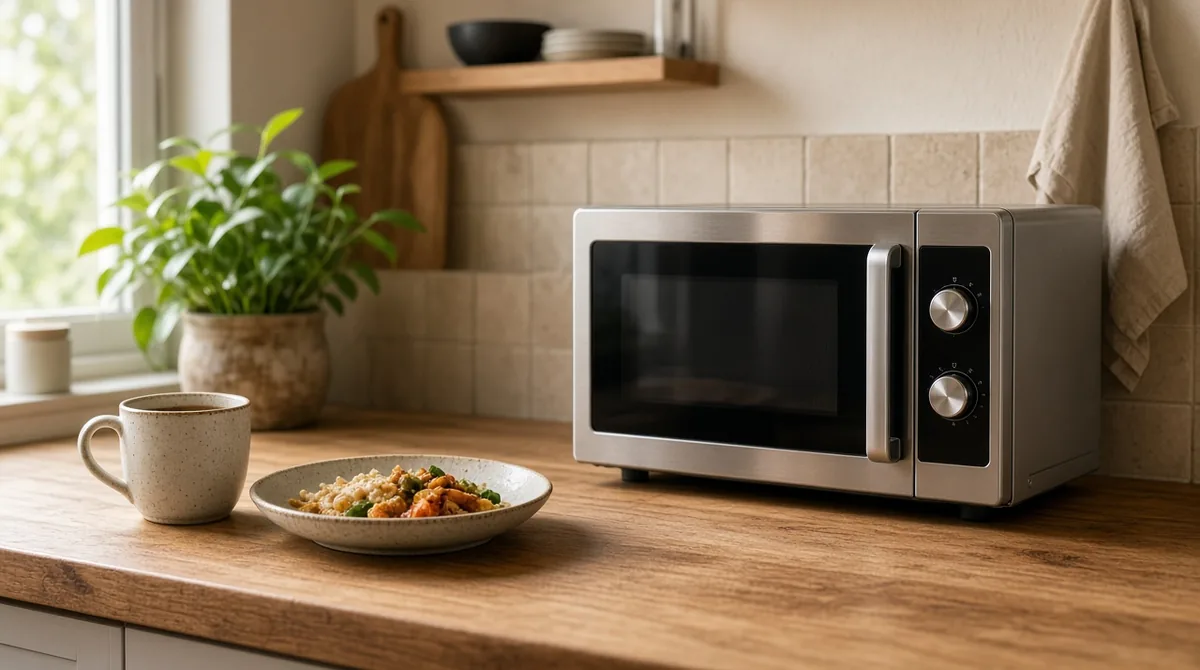
Most people shop for a microwave by wattage alone, then end up with a combo box that crowds the counter or a cheap unit that dies early. This guide walks the real choices first — size, power, combo vs simple, and durability — then shows five current examples. We used the same research approach as our air fryer guide and the rest of the Home & Kitchen hub.
Owner notes matter more than brochure mode lists. More buying guides live in Articles.
How to choose before you open Amazon
1. Measure the counter and the plate
A compact footprint still needs door swing clearance. Check that your everyday plate fits and turns — or that the unit has no turntable, like many commercial pans. Tall combo ovens can fail under upper cabinets even when the listing looks “small.”
2. Match wattage to what you cook
Around 700W is fine for oatmeal and light reheats. Near 1000W is the everyday sweet spot for leftovers and many frozen meals. Some light-duty commercial units run a bit lower on purpose and heat more gently — that is not always a downgrade.
3. Combo microwave vs simple microwave
Combo units (microwave + air fry + bake) save counter space when they replace two appliances. They also add failure points. For some Toshiba air-fryer microwave combos, owners report smoke, sparking, and unexpected heat. Simple commercial-style microwaves win when you want longevity and easy cleanup more than presets.
4. Controls you will still like in a year
Knob + presets work well in apartments if labels are clear. Timed commercial pads are fast once learned; loud beeps can usually be muted. Dial-only units skip popcorn presets entirely. Child-lock doors that live in the handle motion beat two-step puzzles for many households.
5. Durability and service reality
Owner themes split hard: cheap consumer boxes that fail inside a year versus commercial light-duty units people keep for nearly a decade (sometimes after swapping a fuse). Pay more only if you will keep the unit long enough to earn it.
Common mistakes
- Buying max features without reading recent safety and failure threads for that exact model line.
- Choosing 700W to save money, then hating every frozen dinner.
- Ignoring no-turntable commercial pans when cleanup is your main pain.
- Assuming an “air fry combo” means you can walk away like a toaster.
Quick comparison
Swipe the table sideways on a phone to compare models.
| Model | Best for | Style | Price | Action |
|---|---|---|---|---|
| Toshiba OptiChef Basic | One appliance, many modes | Combo | $$ | Amazon → |
| Toshiba Air Fryer Combo | Small apartments / dorms | Combo | $$ | Amazon → |
| Panasonic NE-1054F | Longevity and cleanup | Commercial light-duty | $$$ | Amazon → |
| Sharp R-21LCFS | Simple dial control | Commercial dial | $$$ | Amazon → |
| Chefman Countertop | Budget light reheats | Compact consumer | $ | Amazon → |
Detailed picks
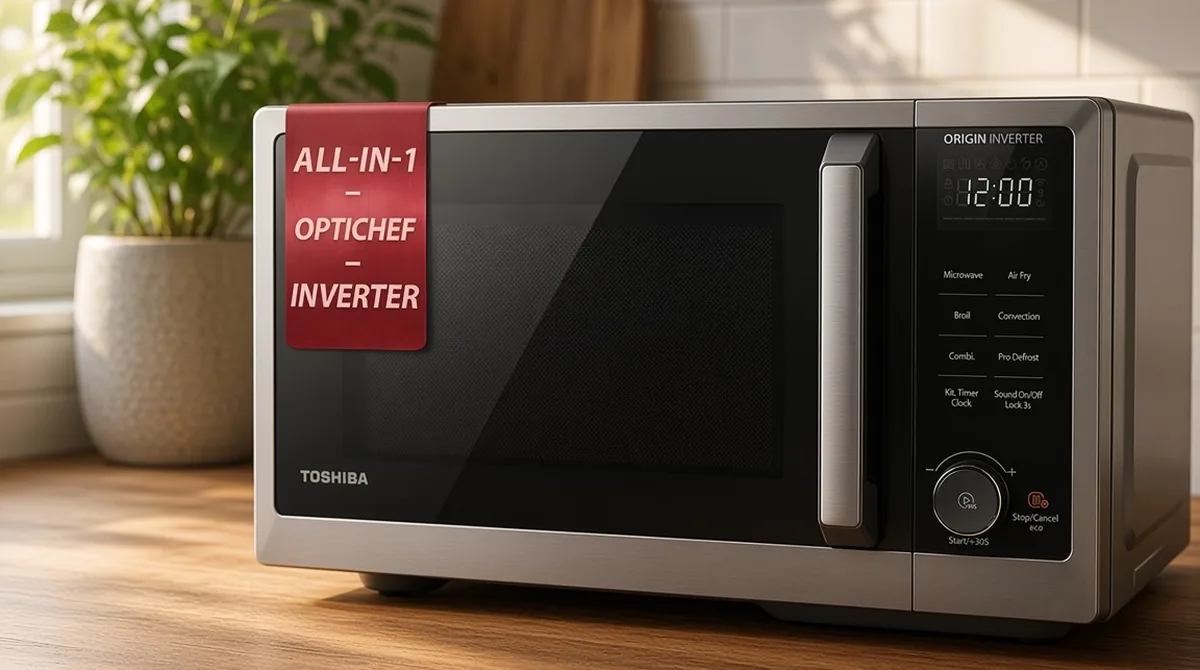 Best all-in-one · $$
1. Toshiba OptiChef Basic Countertop Microwave Air Fryer Combo
Owners who like this unit talk about a compact footprint that still feels packed with useful modes: microwave, air fry, convection, broil, and defrost in one chassis. The knobs are easy to learn, the stainless interior wipes clean, and the cavity light is bright enough to check food without opening the door. Happy reviews also call out solid build feel and accessories like an air fry basket and rack.
Pros
- Compact footprint that still fits real daily cooking
- Microwave + air fry + convection + broil in one machine
- Simple knob controls owners understand quickly
- Stainless look and interior that clean up well
- Bright interior light for checking food mid-cook
- Useful accessories (basket / rack in many bundles)
- Fast, powerful heating notes around the 1000W class
Cons
- Door mechanism failures show up in unhappy reviews
- Some owners report short lifespan and hard warranty paths
- Quality-control complaints appear alongside the praise
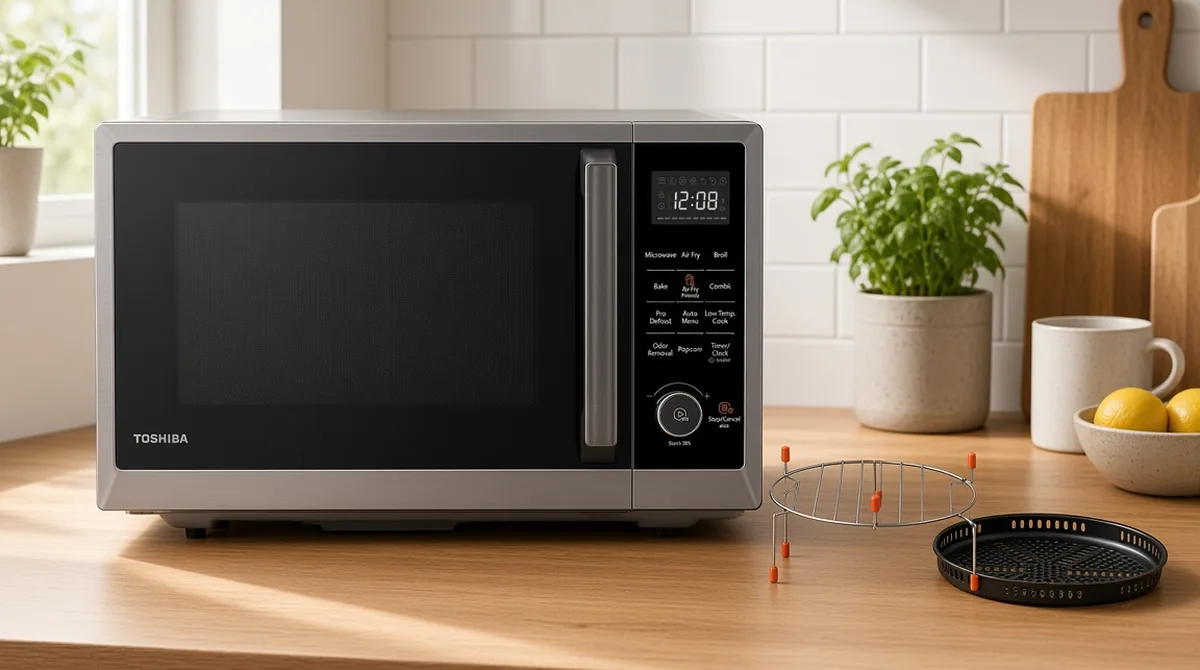 Best apartment upgrade · $$
2. Toshiba Air Fryer Combo Microwave
This is the dorm / first-apartment upgrade story when the unit behaves. Owners praise quiet operation, easy cleaning, shorter cook times than dying old microwaves, and air-fry results that beat plain microwave reheats. The child-lock door button annoys people for a few days, then becomes habit.
Pros
- Strong space-saver for apartments and dorms
- Quiet run — some owners almost miss the end beep
- Air fry mode gets crispy food praise when the unit works
- Easy to clean and maintain in daily use
- Looks clean and modern on a small counter
- Replaces several gadgets for people cooking solo
- Handle child-lock becomes natural after a short learning curve
Cons
- Smoke, sparking, and overheating reports on related Toshiba combo lines
- Support and refund stories get ugly after return windows close
- New-appliance smell for the first day or two for some buyers
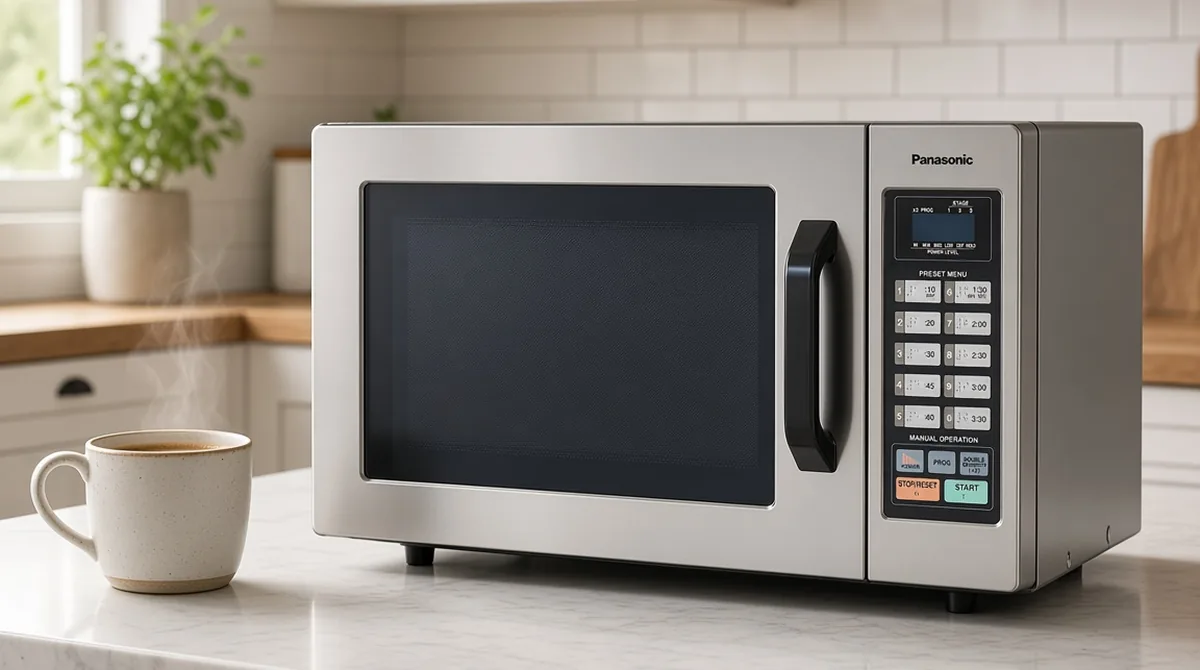 Best longevity · $$$
3. Panasonic NE-1054F Compact Light-Duty
This is the “buy commercial, stop replacing junk” pick. Owners highlight tank-like build, even heating, no turntable to scrub, and multi-year daily use — sometimes after a simple fuse swap. Timed pads feel odd for a day, then become faster than hunting popcorn buttons. Loud restaurant beeps can be muted. Defrost praise is unusually strong.
Pros
- Built for hard daily use, not trend features
- Even, predictable heating in owner notes
- No turntable — cavity wipes clean faster
- Excellent gentle defrost / gentle reheat themes
- Beeps can be turned off completely
- Serviceable design; fuse fixes show up in long ownership stories
- Simple timed buttons once you learn the layout
- Noticeably more solid than cheap consumer boxes
Cons
- Costs more than fashion combos
- Smaller cavity than big home “family” boxes
- Learning curve on the commercial keypad
- Shipping tape can leave marks on stainless
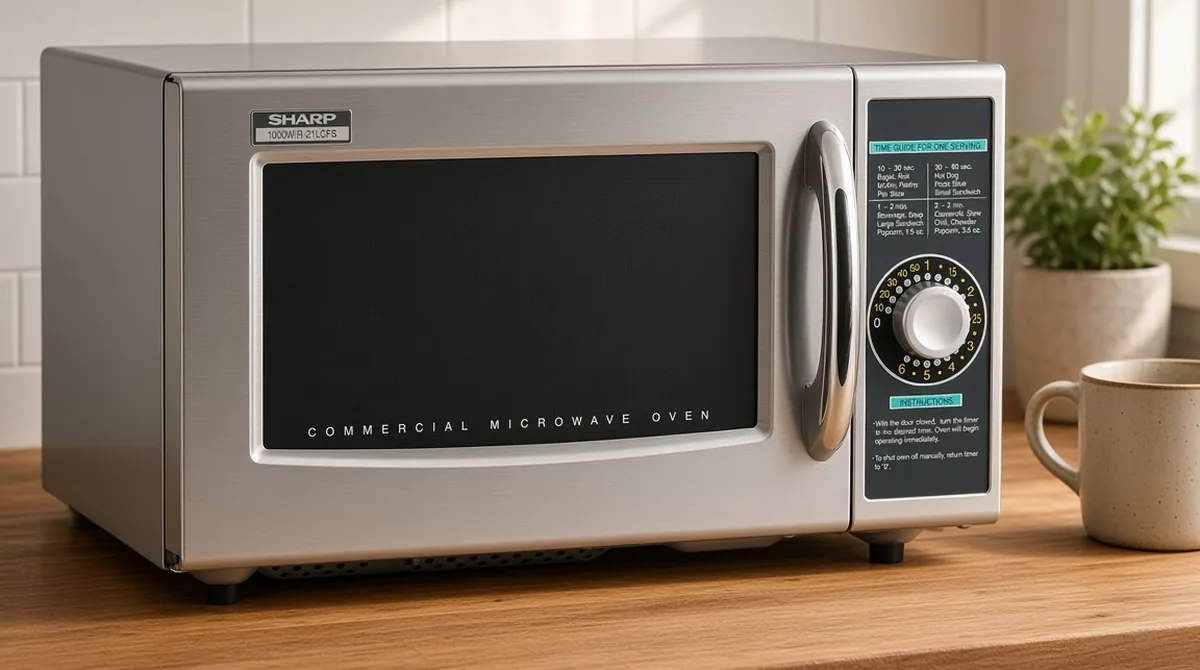 Best simple dial · $$$
4. Sharp R-21LCFS Medium-Duty
No popcorn presets. Twist the dial and it cooks. Owners who hate button trees love the even heating, low splatter, smooth floor, and a door latch that feels more robust than flimsy consumer push-buttons. Long cooks mean resetting the dial.
Pros
- Dead-simple dial control — set time and go
- Very even heating themes vs old turntable units
- Gentle enough that some owners defrost carefully on full power
- Smooth interior floor is easy to wipe
- Less food splatter than uneven home microwaves in praise reviews
- Robust door feel compared with cheap push-button releases
- No confusing preset menus to second-guess
Cons
- Dial max time is short — reset for long cooks
- No power-level menu
- Some durability disappointments after a couple of years
- Meat platters may not fit every household dish
 Best budget compact · $
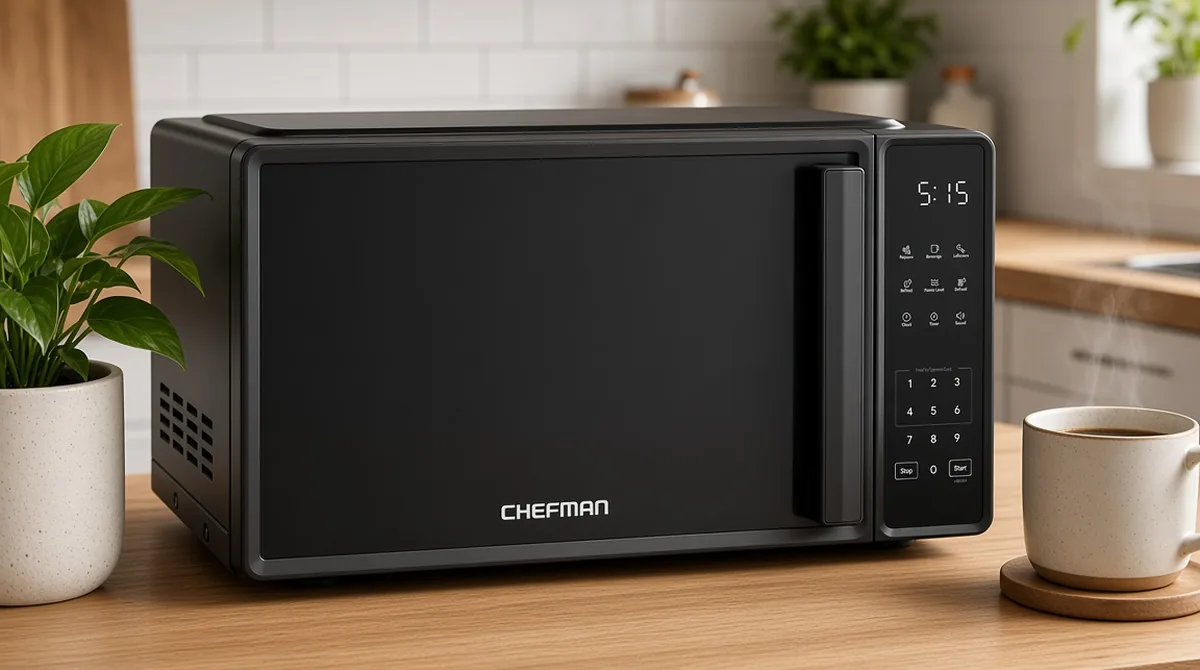
5. Chefman Countertop Microwave Oven
Small, matte black, and aimed at basic reheats. Owners like the sleek look, quiet run, clear end tone, and a child-lock that lives in the same motion as opening the door. Soft keys that need a hard press show up often. A minority report units that barely heat after the return window — test in the first week.
Pros
- Low price for a clean modern look
- Compact size fits dorm and apartment counters
- Handle-integrated child lock is less annoying than two-step locks
- Quiet operation and a clear-but-not-shrieking end tone
- Can silence the beeper permanently on many units
- Low condensation / clean ventilation notes in happy reviews
- Simple daily use once you learn the pad
Cons
- ~700W class is slow on dense frozen food
- Keypad can feel stiff or need heavy presses
- Plastic overlays can crack or confuse owners
- Rare no-heat failures after the return window
Choose this if…
- Want it to last and stay simple → Panasonic NE-1054F.
- Hate presets; want a dial → Sharp R-21LCFS.
- Need microwave + air fry in one footprint → Toshiba combo, only with eyes-on use and model checks.
- Tiny budget / light reheats → Chefman compact, tested the first week.
Our research method
This guide uses listed features, cavity style, wattage class, and repeated owner themes about cleanup, noise, failures, and safety — not a kitchen lab we run.
FAQ — How to choose a microwave
1. How many watts do I need?
For everyday leftovers and many frozen meals, aim near 1000W. 700W is slower and better for light reheats only.
2. Are microwave air-fryer combos worth it?
Yes when they replace two appliances and you stay nearby. No if you want a boring microwave that just reheats.
3. Should I buy a commercial microwave for home?
Often yes for durability and cleanup. Expect fewer consumer presets and a different control layout.
4. Do I need a turntable?
No. Many commercial units heat without one and wipe cleaner. Just confirm your dish fits the cavity.
5. What about Toshiba combo safety complaints?
Take them seriously. Prefer attended use, unplug when idle if you are worried, and verify your exact model against current advisories before buying.
Conclusion
Start with size and honesty about features. For most homes that want a microwave to last, the Panasonic NE-1054F is the safer long bet. Pick Sharp for dial simplicity, a Toshiba combo only if space forces a multi-cooker and you will watch it, and Chefman when the budget is tiny and the job is light.
Amazon Affiliate Disclosure: As an Amazon Associate we earn from qualifying purchases. Commissions do not change the advice.