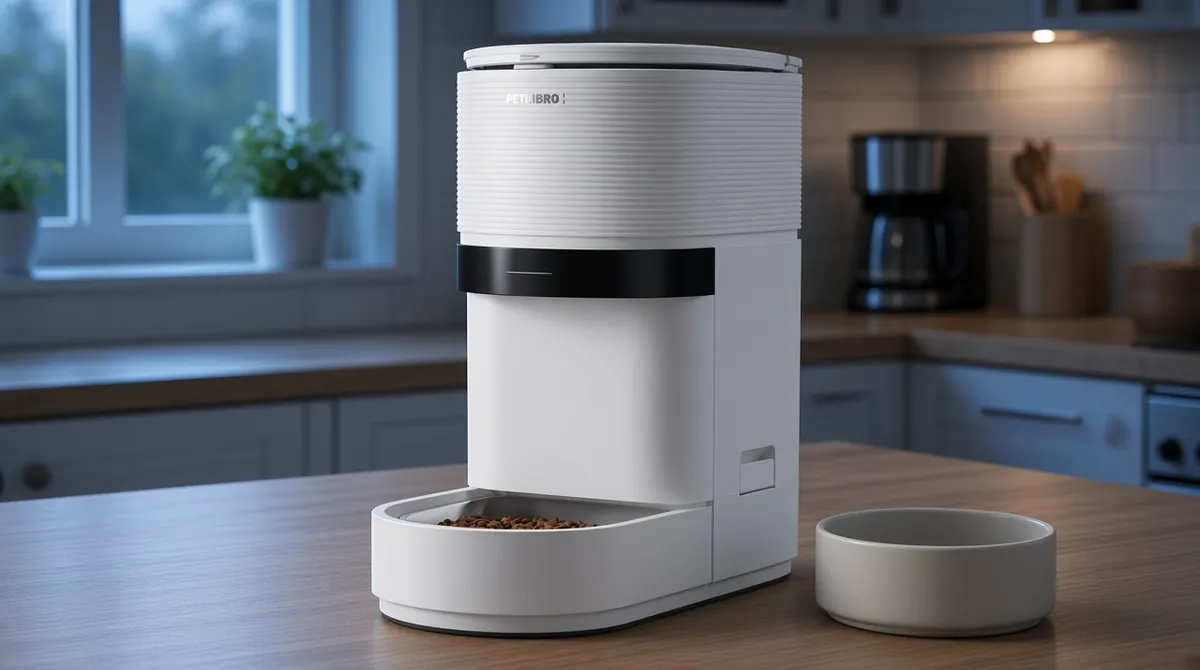
Buying an automatic pet feeder seems straightforward: choose a model with an appealing design, fill the hopper with crunchy kibble, set a timer for 7:00 AM and 6:00 PM, and reclaim your morning sleep. Yet veterinary waiting rooms and pet parent discussion boards are flooded with horror stories. Feeders jam silently on non-standard kibble shapes while owners are away on weekend trips; summer thunderstorm blackouts reset digital timers, leaving animals hungry; and porous plastic feeding dishes harbor bacterial colonies that cause severe feline chin acne. An automated dispenser is not just another smart-home gadget; it is a life-support appliance responsible for your pet’s daily nutrition.
Our analysis examines the most frequent hardware failures, behavioral oversights, and hygiene pitfalls documented by veterinarians and experienced pet owners. Before clicking "buy" on the first budget dispenser you see, review these critical mistakes to protect your pet's wellness. For our fully vetted hardware recommendations ranked by category and lifestyle, consult our comprehensive guide to the best automatic pet feeders of 2026. If you also want live video confirmation of mealtimes, see our top-rated picks in our pet camera guide, and explore our full Pet Supplies hub.
The 6 Most Common Automatic Pet Feeder Mistakes
Mistake 1: Ignoring Kibble Geometry & Diameter (The Rotary Jam)
What people do wrong: Most pet owners assume that if dry food fits through the hopper lid, it will dispense without issue. They pour triangular dental kibbles, oversized dog discs, or oily freeze-dried raw bites into standard rotating impeller feeders.
The real-world consequence: Standard automatic feeders use rotating silicone or plastic paddle wheels. If a kibble morsel exceeds 15 millimeters in diameter—or has sharp geometric points like stars or triangles—it bridges across the narrow hopper funnel or wedges between the flexible paddle fin and the rigid plastic casing. The electric motor stalls silently; while your smartphone app displays a cheerful "Meal Dispensed" confirmation, the bowl remains bone-dry, leaving your pet without food for days while you travel.
What to do instead: Measure your pet’s dry food before buying a feeder. For standard rotary dispensers, ensure kibble is uniform, spherical, and between 2mm and 15mm in diameter. If your pet consumes large-breed kibble, freeze-dried chunks, or irregular shapes, choose a conveyor-belt drive (such as the PetSafe Simply Feed) that lifts food in open pockets rather than squeezing it through a rotating wheel.
Mistake 2: Relying Exclusively on Wall Outlet Power (The Blackout Trap)
What people do wrong: Owners plug their new automatic feeder into the wall using an included 5V USB adapter and toss the battery compartment cover back into the retail box, leaving the battery bay empty to save a few dollars on alkaline cells.
The real-world consequence: A sudden summer thunderstorm, construction breaker surge, or accidentally knocked-loose plug cuts wall power. Unbuffered smart feeders immediately power down. Even worse, many entry-level models do not have internal non-volatile memory: when power is restored, the internal clock resets to 12:00 AM, completely scrambling meal schedules. Your cat receives breakfast at 2:00 AM and nothing for the rest of the day.
What to do instead: Treat backup batteries as mandatory safety equipment, not an optional accessory. Always install three fresh D-cell or AA alkaline batteries upon initial setup. Quality feeders (like the PETLIBRO Granary) run off wall power primarily but seamlessly switch to battery power the millisecond voltage drops, keeping internal quartz clocks and dispensing motors operational for weeks without AC power.
Mistake 3: Using Cheap Porous Plastic Bowls (The Feline Acne Disaster)
What people do wrong: Many budget feeders under $50 come equipped with molded plastic feeding trays. Owners use them continuously because they snap conveniently into the base unit.
The real-world consequence: Plastic is fundamentally soft and porous. Microscopic surface scratches from pet teeth, metal utensils, and dry kibble friction quickly become breeding grounds for bacterial biofilms. When a cat or dog rests their chin against the rim of a plastic bowl while eating oily kibble, bacteria penetrate their hair follicles, causing feline chin acne—a painful condition marked by blackheads, bleeding pustules, and secondary skin infections that require expensive veterinary antibiotics and topical washes.
What to do instead: Never feed pets from plastic dishes long-term. Choose feeders that include removable, food-grade 304 stainless steel or glazed ceramic bowl inserts. If your existing feeder only accepts plastic trays, place a wide, shallow stainless steel saucer inside the tray to protect your pet’s skin.
Mistake 4: Putting Canned Wet Food into Unrefrigerated Hoppers
What people do wrong: Assuming an automated feeder will keep any pet food fresh, owners scoop canned wet food, pâté, or fresh cooked chicken into standard multi-meal rotating carousel trays without adequate cooling.
The real-world consequence: According to the FDA Center for Veterinary Medicine, open canned pet food left at room temperature (above 40°F) begins multiplying dangerous bacterial pathogens—including Salmonella and Listeria—within four hours. In warm summer apartments, wet meat oxidizes, crusts over with foul-smelling gray films, and attracts fruit flies. Pets eating spoiled wet food suffer acute gastrointestinal distress, severe vomiting, and dehydration.
What to do instead: Never place wet or raw food into standard dry food hoppers. If you need to schedule wet meals, use a rotary feeder equipped with dual frozen gel ice packs (like the Cat Mate C500) for trips under 24 hours, or invest in an actively refrigerated semiconductor cooling feeder (like the PETLIBRO Polar) that keeps canned meat chilled below 50°F for up to 72 hours.
Mistake 5: Underestimating Pet Dexterity (The "Smart Paw" Heist)
What people do wrong: Owners underestimate the intelligence and physical persistence of food-motivated pets, placing top-heavy plastic dispensers on polished kitchen floors without securing the lid or base.
The real-world consequence: Hungry, clever cats and dogs quickly figure out that aggressive physical contact yields rewards. A cat will reach their flexible forearm up the dispensing chute to dislodge kibble from the paddle wheel, while a 20-pound dog will ram the feeder with their snout until it tips over, smashing the flimsy snap-on lid and gorging on three pounds of dry food in five minutes—leading to life-threatening gastric bloat.
What to do instead: Select feeders equipped with physical anti-tamper mechanisms: recessed food chutes with one-way swinging flaps, weighted bases with non-slip rubber silicone pads, and heavy twist-lock lids (like the PETLIBRO Granary). If your pet is an aggressive table-tipper, position the feeder in a snug corner or secure it against baseboards.
Mistake 6: Forgetting Multi-Pet Theft & Prescription Diets
What people do wrong: Placing two standard timed automatic feeders side-by-side in a multi-pet home and assuming each animal will politely eat only from their designated bowl.
The real-world consequence: In multi-animal households, dominant pets or greedy dogs inevitably bully timid companions away from their bowls. If one cat is on a normal adult diet while the other requires a $90-per-bag prescription renal or urinary diet, the dominant animal gorges on both bowls while the sick pet starves. Furthermore, healthy animals consuming high-fat medical diets frequently develop severe pancreatitis or kidney complications.
What to do instead: In multi-pet homes with dietary conflicts, timed dispensers are completely ineffective. You must deploy microchip-selective access feeders (such as the SureFeed Microchip Feeder) that read your pet’s implanted veterinary RFID chip, opening only for the designated animal and snapping shut the moment an intruder approaches.
Pre-Purchase Checklist: 5 Safety Rules Before You Buy
- Rule 1: Kibble Caliper Check: Measure your dry food pellets. If they exceed 15mm or have triangular star shapes, skip rotary paddle feeders and choose a conveyor belt system.
- Rule 2: Outage Insurance: Never operate a feeder without fresh alkaline backup batteries installed in the base, even if plugged into an AC wall outlet.
- Rule 3: Stainless Steel or Ceramic Only: Reject any feeder that does not offer a removable food-grade 304 stainless steel or ceramic dish to prevent chin acne.
- Rule 4: 24-Hour Dry Run: Always test a new feeder at home for at least 48 hours while you are present before relying on it for an unsupervised weekend trip.
- Rule 5: Monthly Desiccant Rotation: Replace the silica gel freshness packet inside the hopper lid every 30 days to stop humidity from turning crunchy kibble into moldy sludge.
Hardware Remedies: 3 Problem-Solving Feeders
If you have struggled with specific feeder failures in the past, these three proven models solve the most common mechanical traps:
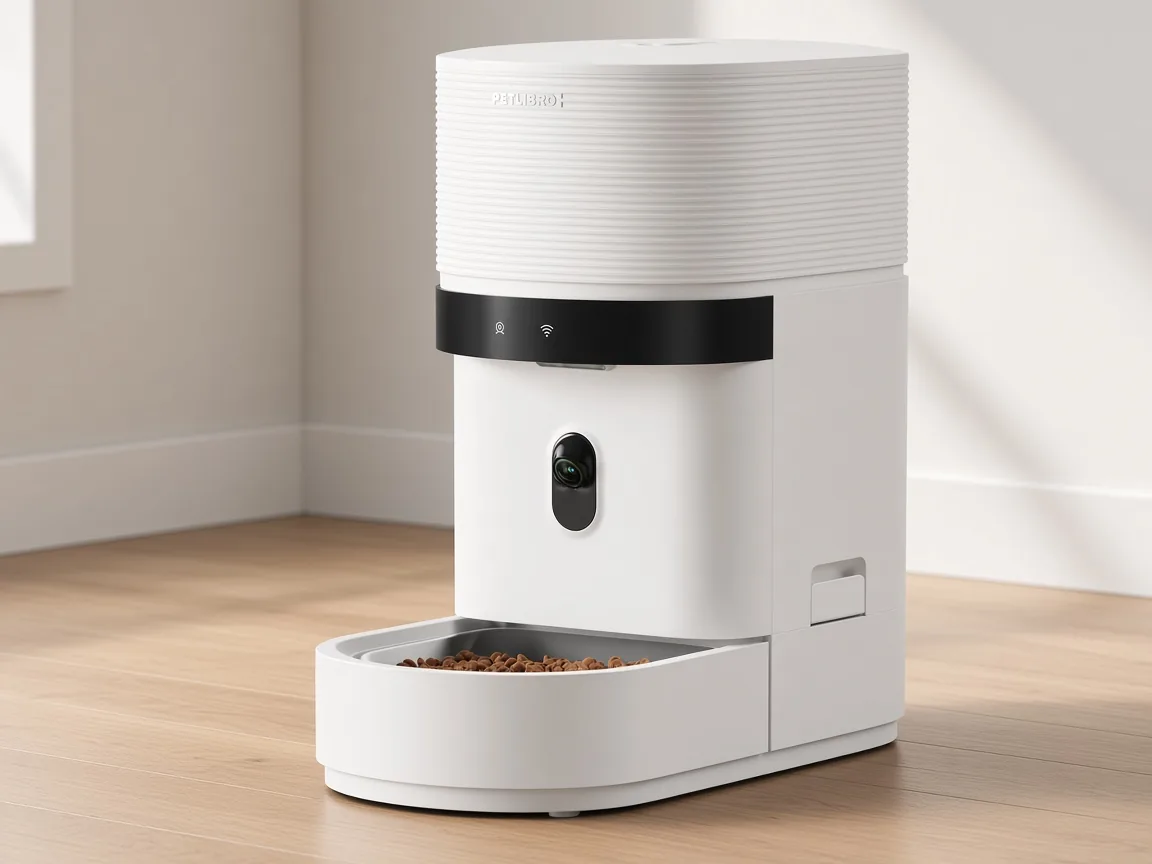 Solves power outage anxiety and clever paw theft with dual-power redundancy and an…
Remedy. PETLIBRO Granary Wi-Fi (5L) — The Anti-Tamper & Blackout Remedy
The PETLIBRO Granary directly addresses the two most common feeder complaints: blackouts and food theft. Its dual-power design runs off USB-C wall power while keeping three D-cell alkaline batteries in reserve. If the power or Wi-Fi drops, internal memory continues dispensing scheduled meals without missing a beat. The top lid features a secure twist-lock mechanism that prevents even the most aggressive cats from knocking off the cover, while a recessed chute with silicone seal flaps prevents paw fishing.
Pros
- Strong fit for its stated use case
- Clear upgrade over mushy membrane boards
Cons
- Cheap timers without battery backup can skip meals after outages
- Narrow augers jam on large or oddly shaped kibble
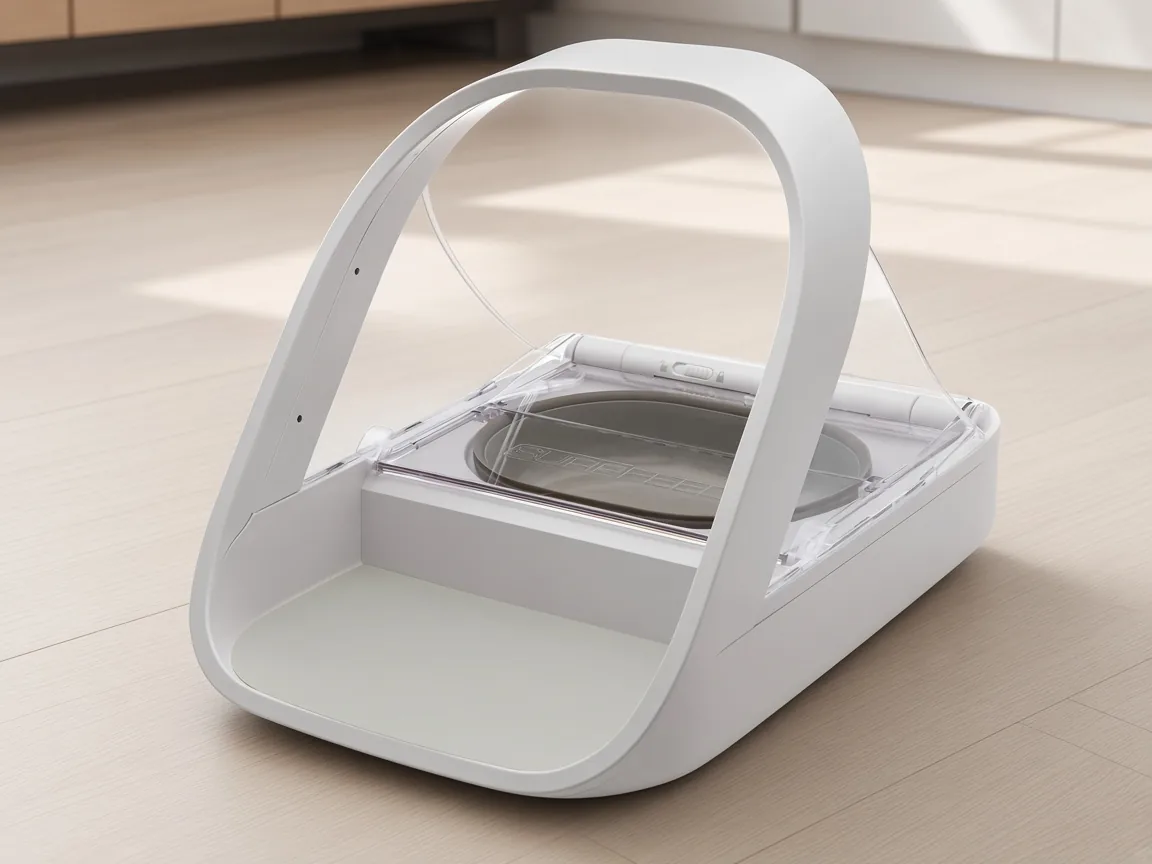 Solves multi-pet bullying and prescription diet contamination with veterinary…
Remedy. SureFeed Microchip Feeder — The Food Theft & Medical Diet Remedy
For multi-pet households, the SureFeed eliminates food guarding and cross-eating. Its overhead RFID arch reads your pet's embedded microchip, sliding the motorized lid open solely for the designated animal. An airtight rubber gasket keeps wet or dry food fresh and odor-free for over 12 hours, completely stopping greedy siblings from stealing expensive prescription food.
Pros
- Gasket mount for softer typing feel
Cons
- Wi-Fi models fail silently if the home network drops
- App-only controls are useless during travel without a backup schedule
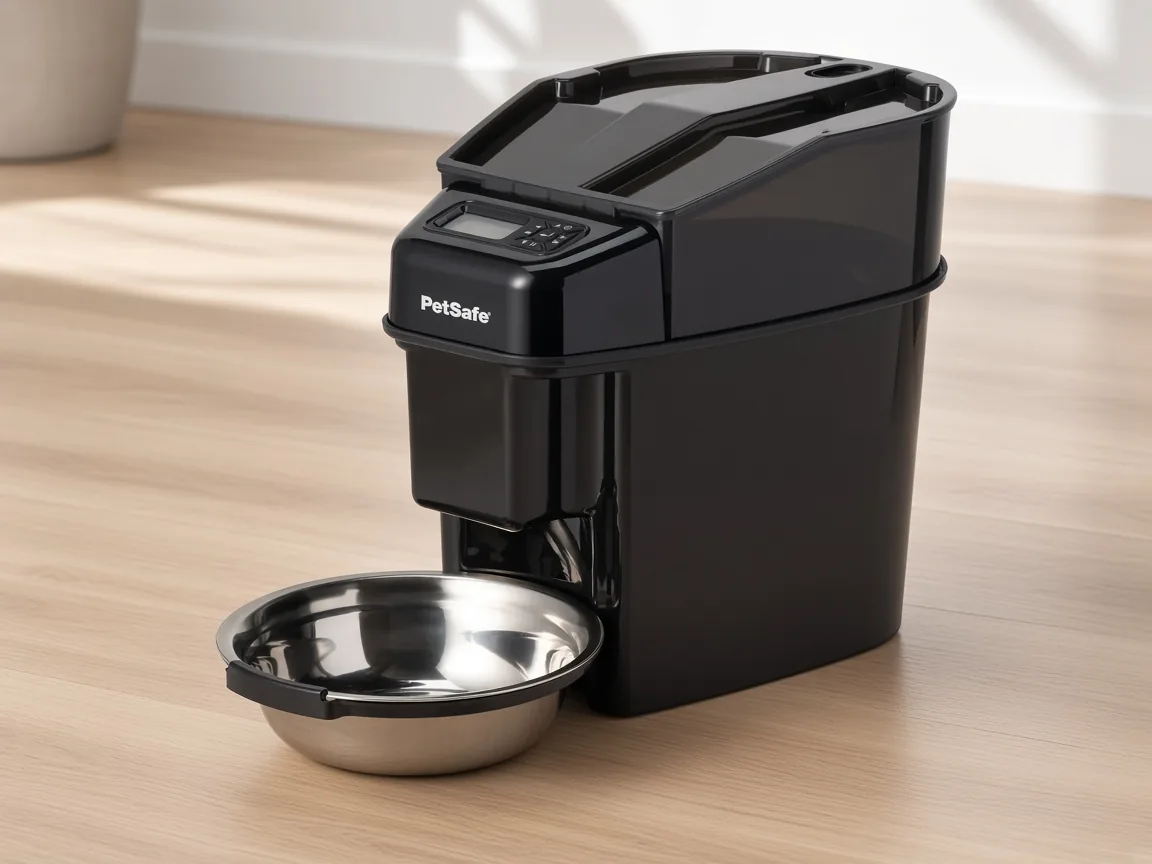 Solves motor jams on irregular kibble shapes using an industrial-grade motorized…
Remedy. PetSafe Healthy Pet Simply Feed — The Odd-Kibble Jam Remedy
If your pet eats triangular, disc-shaped, or semi-moist kibble that binds up standard rotary impellers, the PetSafe Simply Feed is the ultimate mechanical solution. Rather than a spinning paddle, it utilizes a motorized conveyor belt that scoops food up in individual pockets, guaranteeing smooth, jam-free dispensing regardless of kibble geometry.
Pros
- Strong fit for its stated use case
- Clear upgrade over mushy membrane boards
Cons
- Shared bowls and porous trays grow biofilm without frequent washing
- Portion claims on the box often mismatch real cup volume
Our Research Method
Nobody at Pickora ran a closed commercial veterinary trial or jammed hundreds of feeders intentionally for this guide. Instead, our conclusions are synthesized from official American Veterinary Medical Association (AVMA) dietary safety protocols, FDA Center for Veterinary Medicine guidelines on wet pet food spoilage, and analyzed failure logs from verified pet owners across multiple pet care forums through November 2026. We focused specifically on failure modes that compromise animal welfare: motor gear stalls under dense kibble loads, power cut schedule loss, and bacterial skin infections caused by porous plastics.