Updated September 17, 2026
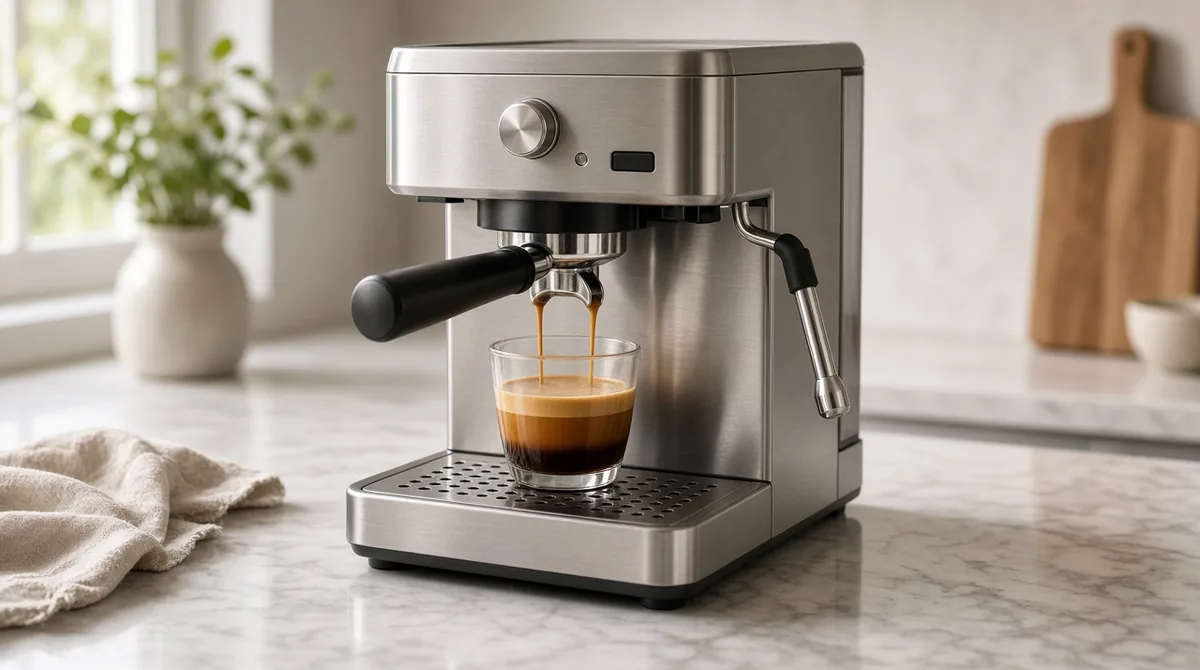
A good home espresso setup is not about the flashiest panel. It is about heat, grind, and a steam style you will actually use on a Tuesday morning.
This guide walks through the choices that matter first. Then it shows six current machines people buy a lot — from a slim budget Stilosa to a Bambino Plus and a Gaggia Classic-class metal box. Notes come from listed specs and Amazon owner praise and complaint clusters. This is not a kitchen lab we run. If you still want drip or pods instead, start with our best coffee makers 2026 roundup, or browse the Home & Kitchen hub.
How to choose (before you pick a brand)
1. Budget a grinder — or accept pressurized baskets
Fresh espresso-fine grind matters more than most machine upgrades. If you will not buy a decent burr grinder yet, start with pressurized baskets. Plan to move to single-wall baskets later. Owners who skip this step often blame the machine for weak shots.
2. Decide milk style: auto froth vs manual wand
Auto froth (Bambino Plus) wins busy mornings and guests. A manual wand (Bambino, Gaggia, Dedica, Stilosa, Impress) teaches control and latte art. Manual steam also means a learning week of screams, large bubbles, and burned milk.
3. Portafilter size and upgrade path
51mm is common on slim De’Longhi units. 54mm is the Breville Bambino world with plenty of aftermarket parts. 58mm (Gaggia Classic class) opens the biggest accessory and mod ecosystem. Size is not “better” by itself — it changes which baskets and tampers fit.
4. Heat-up time and brew-to-steam wait
ThermoJet machines like the Bambinos heat in seconds. Single-boiler Gaggia units need warm-up and a pause when you switch from shot to steam. If you make three lattes for guests, that wait is real.
5. Footprint, weight, and counter grip
Tiny kitchens love Bambino and Dedica widths. Light machines can slide when you lock the portafilter — owners use silicone mats. Built-in grinder machines (Impress) need more width and overhead for the hopper.
6. Maintenance reality
Descale on schedule, especially on hard water. Backflush where the design allows. Wipe and purge steam wands right after milk. Ignore this and even good machines taste dull or fail early.
Common buying mistakes
- Buying a machine first and a $20 blade grinder second.
- Expecting café shots on day one with grocery pre-ground.
- Choosing auto-everything when you hate cleaning milk systems.
- Ignoring water quality (hard water kills boilers and thermocoils).
- Skipping the drip tray and calling normal purge “a leak.”
Quick comparison
Swipe the table sideways on a phone to compare models.
| Model | Best for | Style | Price | Action |
|---|---|---|---|---|
| Bambino Plus | Easy milk drinks | 54mm + auto froth | $$$ | Amazon → |
| Bambino | Compact grow-into-it | 54mm + manual steam | $$–$$$ | Amazon → |
| Gaggia Classic / E24 | Metal hobby path | 58mm manual | $$$ | Amazon → |
| Dedica Duo | Slim mid budget | Narrow De’Longhi | $$ | Amazon → |
| Stilosa | Cheap first try | 51mm entry | $ | Amazon → |
| Barista Express Impress | One box + grinder | Built-in grind + assisted tamp | $$$$ | Amazon → |
Example picks
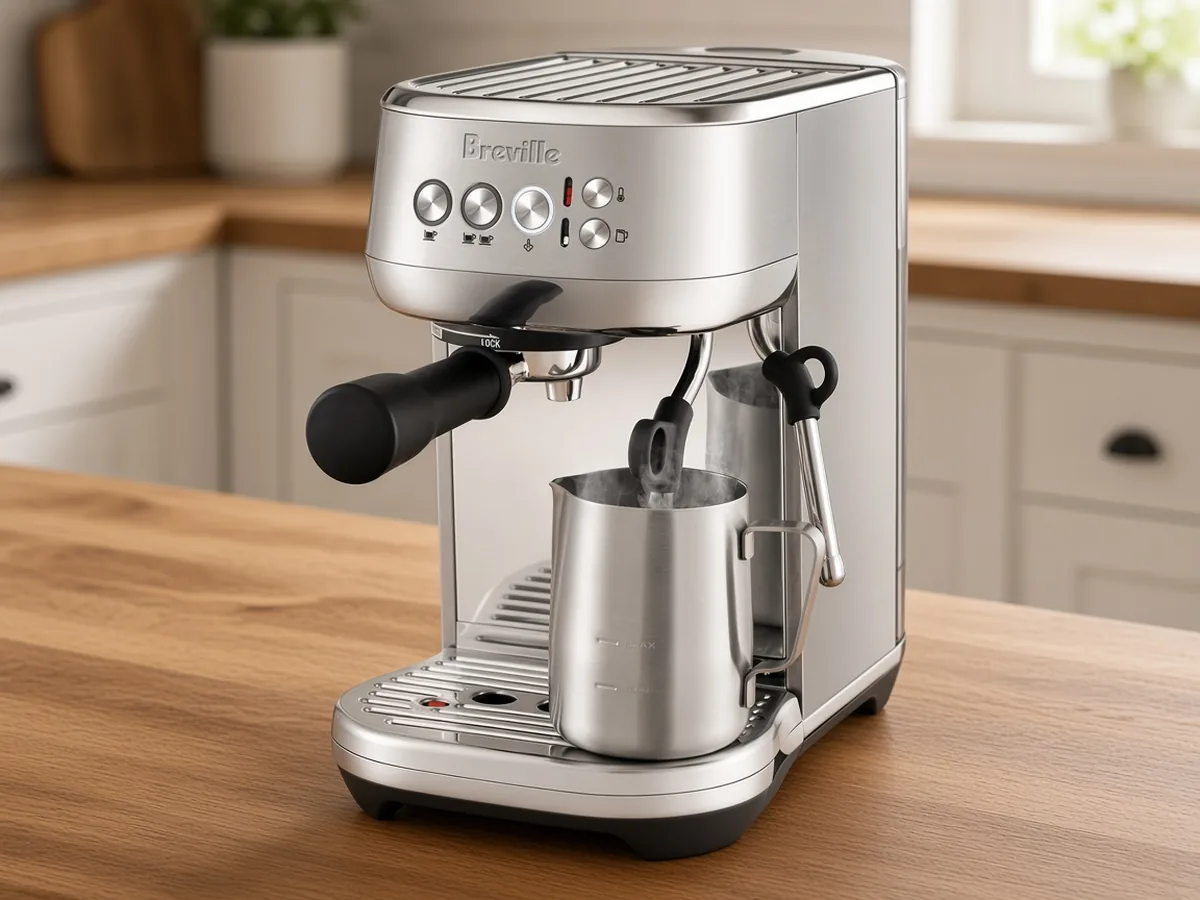 Best easy milk drinks · $$$
1. Breville Bambino Plus (BES500BSS)
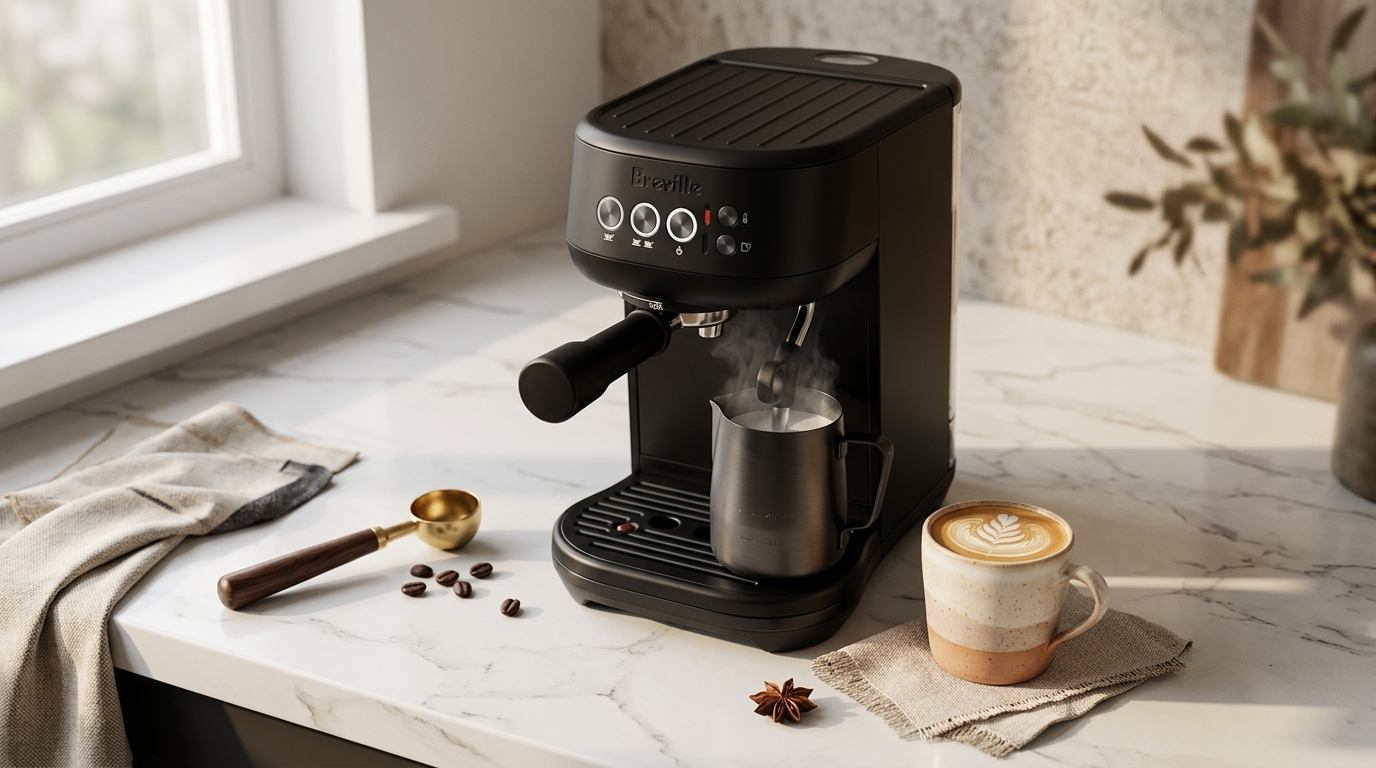
This is the pick when you want café-ish lattes without becoming a full-time barista. ThermoJet heat-up is nearly instant. The auto milk system lets you set heat and foam levels, then walk away for about a minute. Owners who use it daily for a year or two often call it one of their best value kitchen buys — fewer shop runs, smaller footprint, and shots that beat old drip or weak pods.
You still need a real grinder for best results. Many owners start with pressurized baskets, then move to single-wall 54mm baskets and a better tamp setup. The machine is light, so locking the portafilter can slide it unless you hold it or add a mat.
What owners like: fast heat, strong daily reliability stories (even past 1,000 shots), compact counters, guest-friendly auto froth, and simple day-to-day cleaning when you purge the wand into the pitcher.
What owners hate: auto-steam that sometimes stops mid-cycle and forces a purge/clean sequence; plastic inside the stock portafilter; drip tray that fills from internal purge; cleaning steps that no longer match older manuals.
Pros
- Near-instant heat and small footprint
- Auto milk that works for busy mornings
- Long daily-use praise when cleaned
- Room to upgrade baskets and tools later
Cons
- Auto-steam stop quirk wastes time
- Light chassis can move when locking
- Needs a grinder and extras for peak taste
- No loud low-water warning for some users
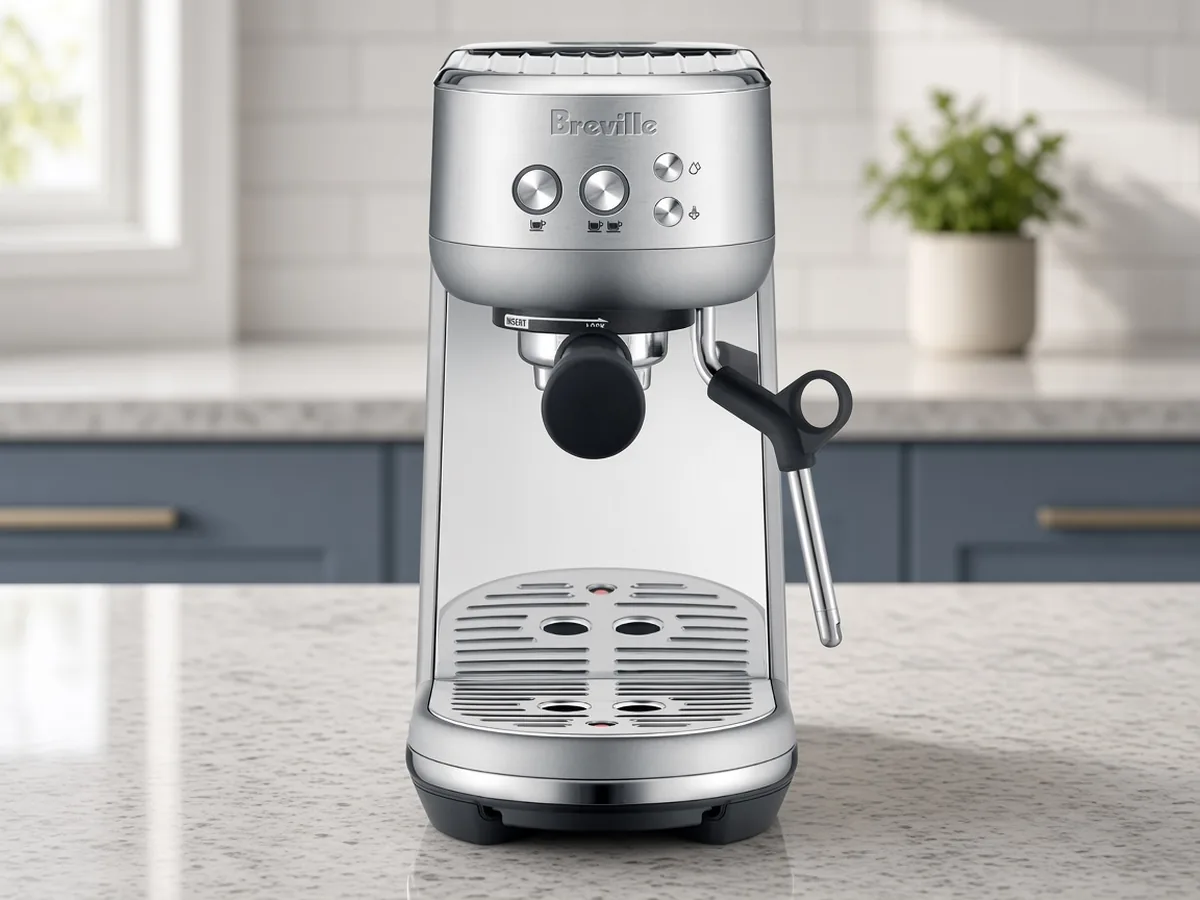 Best compact beginner · $$–$$$
2. Breville Bambino (BES450BSS)
Same fast heat family as the Plus, but with a manual steam wand and a lower sticker price. That is the better split if you will put more money into a grinder. Owners after two or three years of daily shots still report solid performance when they descale and avoid hard water.
Pressurized baskets make early crema easier. As you improve, 54mm aftermarket baskets and bottomless portafilters are easy to find. Some owners say the build feels more plastic than they hoped for the price — fair for the group head feel — but function wins for most beginners.
What owners like: durability with regular cleaning, quiet-enough mornings, programmable shot volume, and a path to better technique without buying a new machine.
What owners hate: plastic-heavy feel; hard-water buildup if ignored; light body; and the truth that pre-ground grocery coffee still tastes flat.
Pros
- Fast heat and compact stainless look
- Manual wand grows with your skill
- Strong multi-year daily-use stories
- Cheaper than Plus if froth is secondary
Cons
- Less “set and forget” milk than Plus
- Plastic parts worry some long-term buyers
- Still needs a good grinder for peak shots
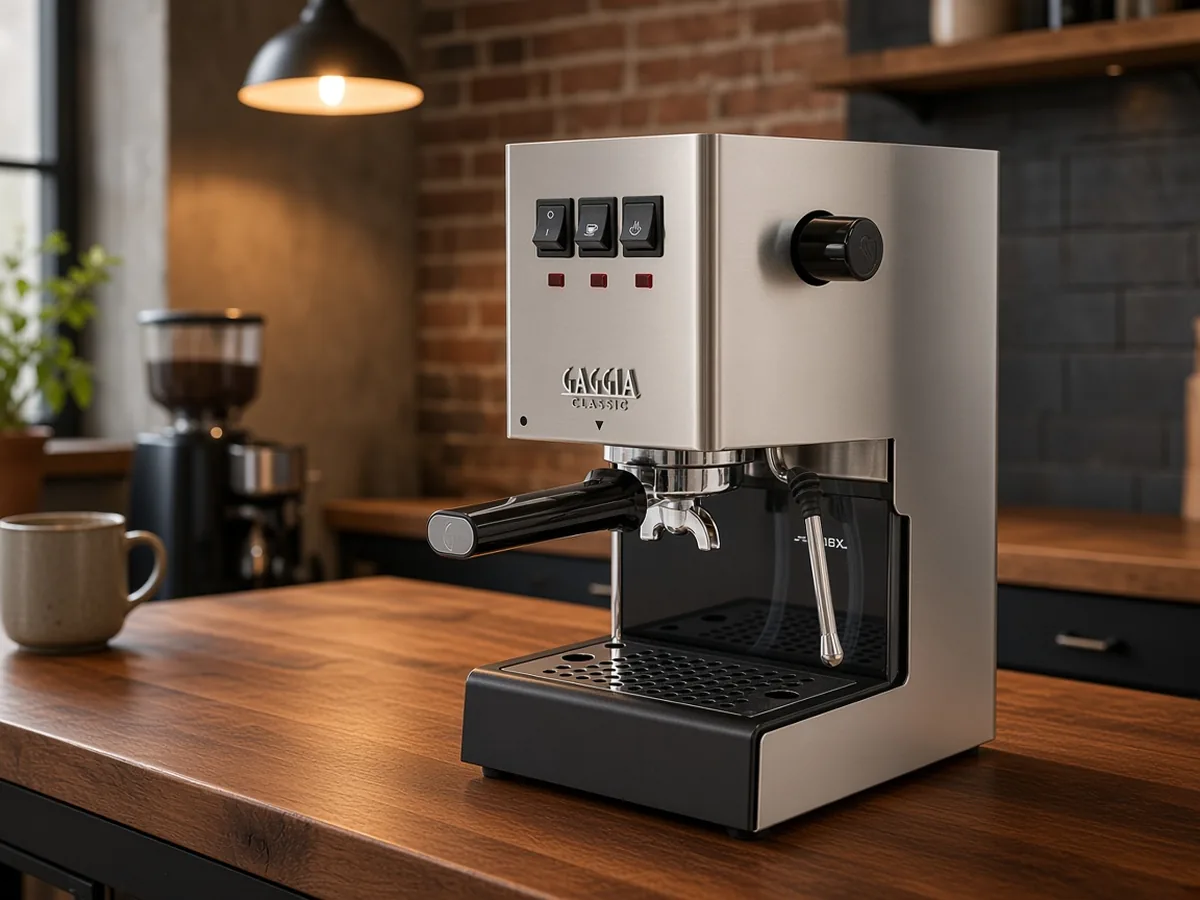 Best metal hobby path · $$$
3. Gaggia Classic / E24
This is the “made of metal, built to learn” pick. The 58mm group opens a huge accessory and mod community. Owners who wanted repairability and café-style workflow — not another touchscreen — keep landing here after research paralysis.
Expect a real learning curve. Warm-up takes longer than a Bambino. Single-boiler design means pull shots first, then wait for steam. Pair it with a capable espresso burr grinder or you will fight channeling forever. Soft or bottled water helps longevity.
What owners like: solid feel, tasty shots once dialed, strong steam with patience, parts and mods, and shop-cost savings that pay back the machine.
What owners hate: brew-to-steam wait; weaker-feeling steam vs commercial; plastic steam knob on some units; and the need for timers, backflush baskets, and technique videos.
Pros
- Metal build and repair reputation
- 58mm ecosystem and community support
- Excellent ceiling once dialed in
- Classic look without touchscreen clutter
Cons
- Slower workflow than ThermoJet machines
- Steeper beginner curve
- Grinder quality is non-negotiable
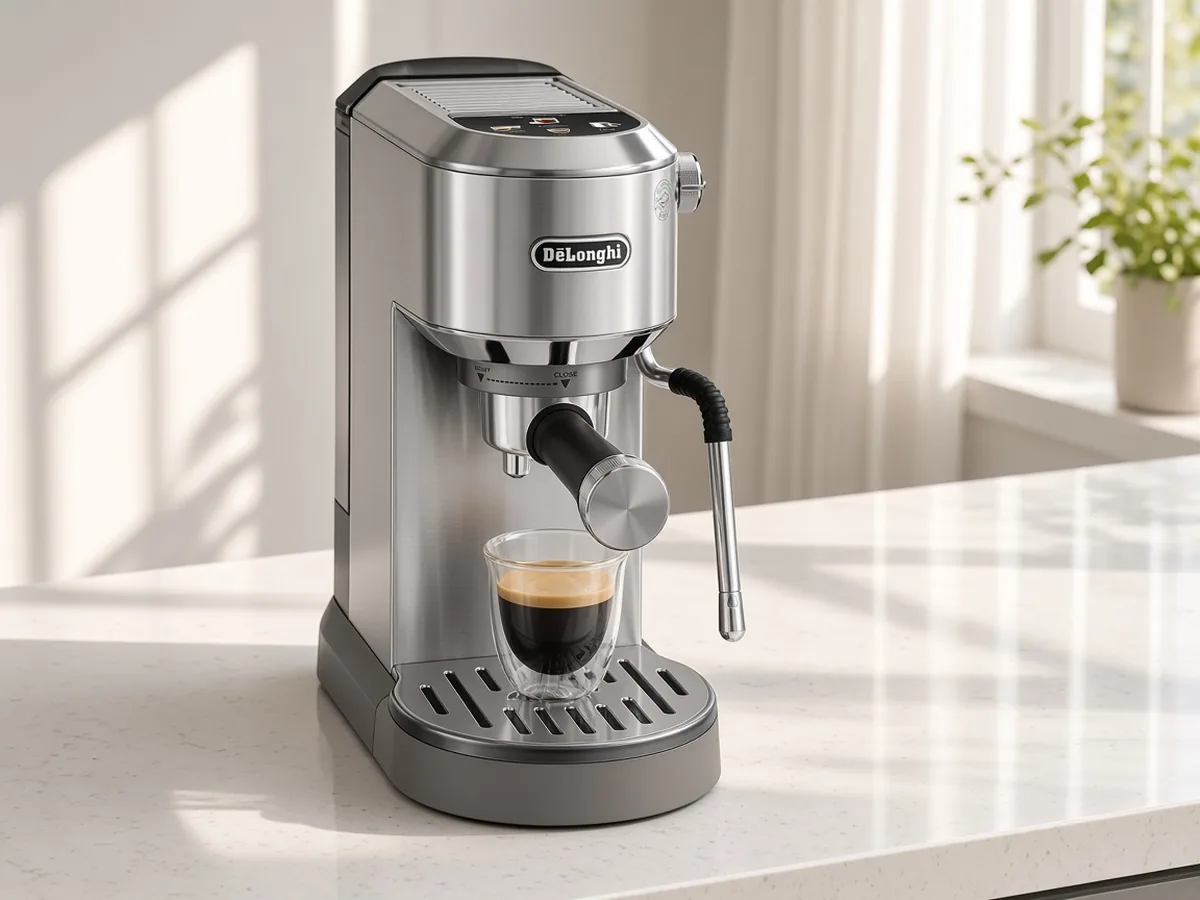 Best slim mid budget · $$
4. De’Longhi Dedica Duo
Choose Dedica when counter width is the constraint and you still want a stylish stainless tower. Owners praise fast ready lights, compact looks (including color options), and better results than older cheap De’Longhi units. Some models lean into iced or cold-brew style drinks as a bonus use case.
Expect a short rocky start: jams, steam-light quirks, and froth mess until you learn the dial and wand. A matching pitcher is often a separate buy. Customer support stories are mixed but some owners get clear help after warranty or setup issues.
What owners like: looks, speed, slim footprint, auto-off after shots on some workflows, and travel-mug clearance when the drip tray comes off.
What owners hate: early jamming until technique clicks; steam indicator quirks; accessories not in the box; froth learning mess.
Pros
- Very slim counter profile
- Fast heat and simple buttons
- Strong “upgrade from cheap De’Longhi” praise
Cons
- Smaller accessory ecosystem than 54/58mm
- Setup quirks in the first weeks
- Pitcher often sold separately
 Best cheap entry · $
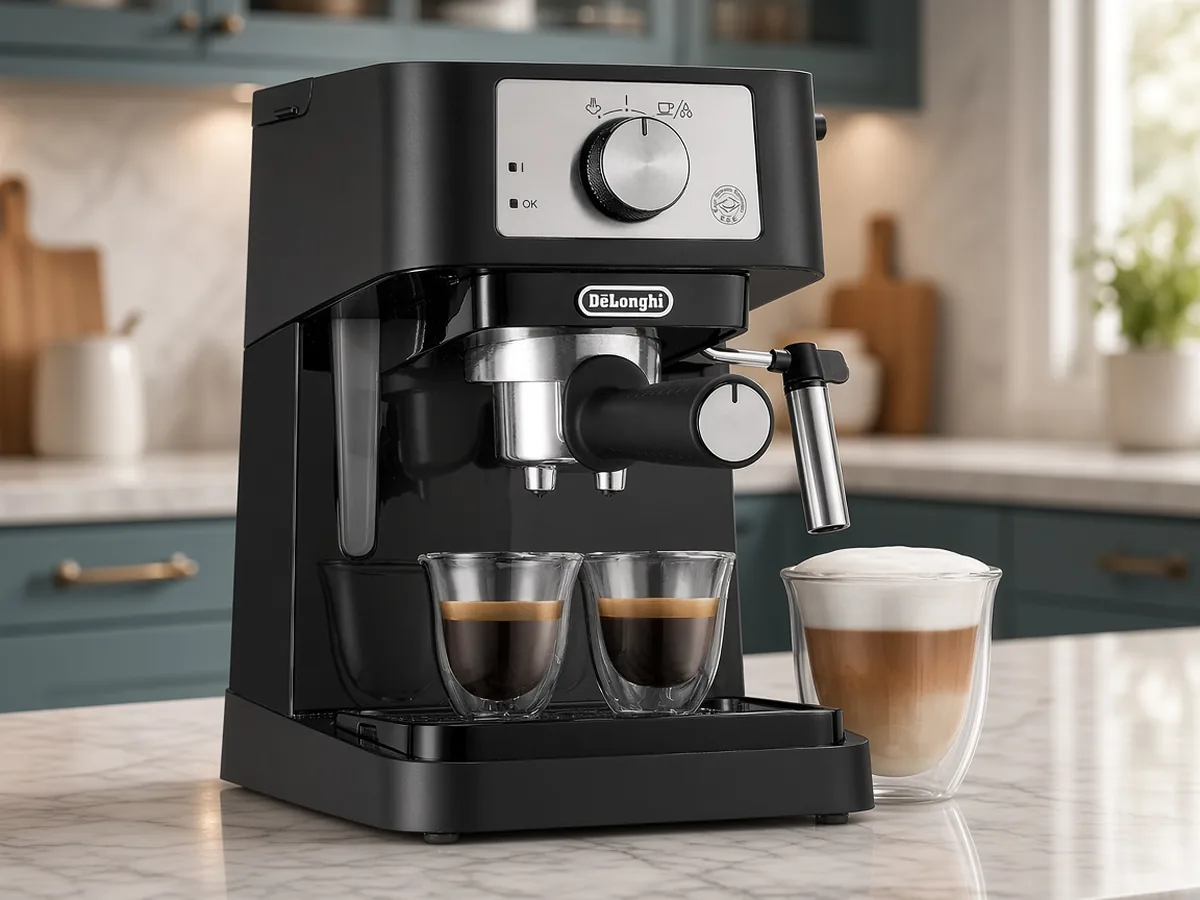
5. De’Longhi Stilosa
This is the honest budget door. Heat is fast. The machine is small. Beginners who watch timing videos and buy fresh beans can make drinks they prefer to a $7 shop line. It is also the pick with the most “read the manual” landmines.
Stock pressurized setups can taste like fake crema until you modify or replace the portafilter path. Shot volume is often manual — you stop the pump yourself. The plastic tamper is weak; buy a real one. Tall tumblers may not fit, so use a shot glass and pour.
What owners like: price, speed vs older cheap machines, small kitchens, and café-like results after practice with fresh beans.
What owners hate: no auto shot stop; pressurized stock limits; missing pitcher/glasses; brew-then-steam order or you scorch the next shot.
Pros
- Low cost to start learning
- Fast heat and simple dial
- Can taste great with fresh grind and technique
Cons
- Manual timing is easy to overshoot
- Stock accessories feel cheap
- Lower ceiling than Bambino / Gaggia
 Best all-in-one · $$$$
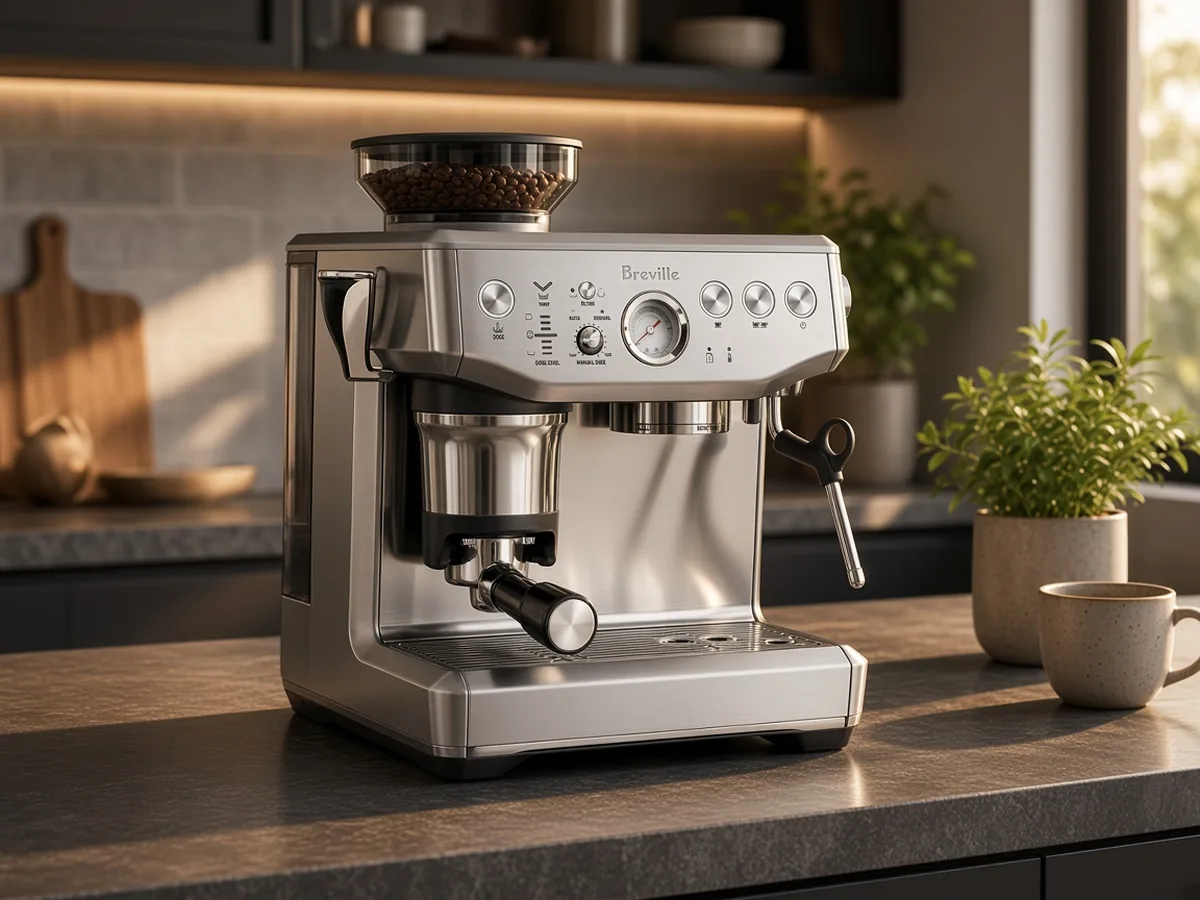
6. Breville Barista Express Impress
Pick Impress when you want the grinder in the same chassis and help with dosing and tamping. The assisted tamp lever and dose feedback cut beginner mistakes. Owners who left Nespresso or dead fully-autos praise stronger shots, hot-water Americanos, and machines that still feel consistent after a year or more of daily use.
There is still a learning week: grind dials, extraction timing near 30 seconds, and steam skill. The hopper can bridge and stick — bump it when the grinder sounds free. There is no friendly low-water sensor on some reports, so dry-pump risk is real if you ignore the tank. It needs more counter space than a Bambino.
What owners like: built-in grind + assisted tamp, pressure gauge guidance, café savings vs pods, and durable daily routines with cleaning.
What owners hate: hopper flow quirks; learning curve; froth technique; expensive official cleaners; footprint.
Pros
- Grinder included — one purchase path
- Assisted tamp helps consistency
- Hot water spout for Americanos
- Strong long-term daily-use praise
Cons
- Costs more and needs desk space
- Bean bridging in the hopper
- Watch the water tank yourself
Simple decision tree
- Mostly lattes, hate frothing: Bambino Plus
- Small counter, will learn steam: Bambino or Dedica Duo
- Want metal and mods for years: Gaggia Classic / E24
- Strict budget to learn: Stilosa
- No separate grinder budget: Barista Express Impress
- Only want pods after all: see our coffee makers guide
Our research method
We compared listed specs and repeated Amazon owner praise and complaint themes from September 2026 research. We did not run a timed café lab. We did not invent buyer quotes.
FAQ
1. Do I need a separate grinder?
Yes for best taste on Bambino, Gaggia, Dedica, and Stilosa. Impress includes a grinder. Pressurized baskets can hide a weak grind for a while — they will not match a dialed single-wall shot.
2. Pressurized or single-wall baskets first?
Start pressurized if you are new. Move to single-wall when your grind and tamp are steady. That is when crema and sweetness get honest.
3. Bambino or Bambino Plus?
Plus if auto milk matters. Base Bambino if you want to spend the difference on a grinder and will steam by hand.
4. Is Gaggia worth the learning curve?
Yes if you want metal, 58mm parts, and a long hobby. No if you need guest drinks with zero practice time.
5. When does a built-in grinder win?
When counter space and one purchase matter more than owning a separate high-end grinder. Impress fits that lane.
Conclusion
Start with the criteria, not the logo. Get a path to fresh grind. Match steam style to your mornings. Then pick Bambino Plus for easy milk, Bambino for compact growth, Gaggia for metal hobby years, Dedica Duo for slim style, Stilosa for a cheap start, or Barista Express Impress when the grinder must live in the same box.
Amazon Affiliate Disclosure: As an Amazon Associate we earn from qualifying purchases. Commissions do not change the advice.